Disclosure: This post may contain affiliate links, meaning if you decide to make a purchase through my links I may earn a commission at no additional cost to you. See my disclosure for more info.
Finding the best protein powder without artificial sweeteners is a common goal for many health-conscious people. Many of us are tired of synthetic additives like sucralose or aspartame. They can leave behind a chemical aftertaste. The good news is that the best options often come from simple, effective sources. Think grass-fed whey isolate sweetened with stevia. Or consider a plant-based blend using monk fruit extract. These choices give you the high-quality protein you need without the junk.
Supplement note: This guide is for educational purposes only and is not medical advice. Always speak with your doctor before using supplements, especially if you are pregnant, nursing, taking medication, or managing a medical condition.
Continue researching Best Protein Powder Without Artificial Sweeteners with our collection of recovery and sleep supplements.
Navigating the World of Clean Protein
The shift away from artificial ingredients is much more than a trend. It's a fundamental change in how people approach nutrition. We're all reading labels more carefully these days. We look for recognizable ingredients. Not a long list of chemicals we can't pronounce. This has forced brands to get creative. They now develop great-tasting products that meet higher, cleaner standards.
Explore more NutritionGeeks guides related to wellness, recovery, nutrition and active lifestyle support.
The numbers don't lie. The U.S. protein supplements market is expected to hit $22.58 billion by 2032. A major part of that growth comes from people demanding transparency. In fact, searches for 'protein powder without artificial sweeteners' shot up by 42% in just one year. This shows a clear preference for natural alternatives. It proves that consumers are more educated than ever. You can find more data on this protein powder market opportunity on Shelftrend.

More NutritionGeeks Wellness Guides
Explore more NutritionGeeks guides connected to wellness, recovery, hydration, energy, sleep and active lifestyle nutrition.
A Quick Guide to Naturally Sweetened Proteins
With so many options, finding the right one can feel overwhelming. This table breaks down the most common types of naturally sweetened protein. It helps you quickly match a product to your specific goals.
Quick Guide to Naturally Sweetened Protein Powders
| Protein Type | Primary Sweetener | Best For | Considerations |
|---|---|---|---|
| Whey Isolate | Stevia or Monk Fruit | Post-workout recovery, lean muscle gain. | Dairy-based; not suitable for vegans or those with lactose intolerance. |
| Plant-Based Blends | Monk Fruit or Stevia | Vegans, digestive sensitivity, meal replacement. | Some single-source plant proteins are incomplete; blends are often better. |
| Egg White Protein | Stevia | Dairy-free muscle building, low-carb diets. | Can have a distinct texture; best when mixed in smoothies. |
| Unflavored Protein | None | Maximum versatility in cooking and smoothies. | Requires you to add your own flavors and sweeteners. |
This table is a great starting point. The real key is understanding how each one fits into your lifestyle and health objectives.
The fundamental goal is to find a product that supports your health objectives without forcing you to compromise on ingredient quality. A clean protein powder should complement your diet, not complicate it with unnecessary additives.
Ultimately, choosing the right protein comes down to aligning the formula with your personal needs. This could be muscle repair after a hard workout. It might be managing your weight. Or maybe you're simply getting more high-quality protein into your day.
Understanding Natural Versus Artificial Sweeteners
The first real hurdle in picking a protein powder is often the sweetener panel on the label. Getting this right is crucial for finding a product that actually supports your health goals. The basic breakdown is simple. Sweeteners are either artificial (synthetic chemical compounds) or natural (derived from plants).
Knowing the difference is everything.
What's the Deal with Artificial Sweeteners?
Artificial sweeteners like sucralose, aspartame, and acesulfame potassium (Ace-K) are lab-created. They are high-intensity sweeteners. They pack a powerful punch of sweetness with almost no calories. That is why you'll find them in so many "diet" or "low-cal" products.
But a lot of people are consciously moving away from them. There's a growing concern over their synthetic origins. Frankly, many just don't like that distinct, chemical-like aftertaste that seems to linger.
This isn't just a niche opinion; it’s a major market shift. The protein supplement industry is valued at a massive $10.88 billion. It's feeling the pressure to clean up its formulas. The artificial sweetener market is still growing. But its overuse in supplements is becoming a liability. More consumers are connecting these additives with potential metabolic issues. You can dig into the market dynamics on CoherentMI.com to see the data for yourself.
The Rise of Natural Sweetener Alternatives
In response, natural sweeteners have become the go-to for most premium protein powders. These are plant-derived options that are widely seen as the healthier choice. They deliver sweetness without the baggage of synthetic ingredients.
You'll most commonly see these three on labels:
- Stevia: Extracted from the leaves of the Stevia rebaudiana plant. It’s up to 300 times sweeter than sugar and has zero calories.
- Monk Fruit: This comes from the luo han guo fruit. Its sweetness is from antioxidants called mogrosides. It’s also calorie-free. Many people prefer it because it doesn't have the bitter aftertaste some notice with stevia.
- Erythritol: A type of sugar alcohol found naturally in certain fruits. It has very few calories. It is generally much easier on the digestive system than other sugar alcohols.
Natural sweeteners aren't just a trend. They signal a fundamental shift toward ingredient transparency. People want to recognize what they’re putting in their bodies, and plant-derived options provide that clarity.
Comparing Taste Profiles and Caloric Impact
Every sweetener interacts with protein differently. This changes the final taste and even the texture of your shake. Stevia, for instance, can sometimes leave a slightly bitter or licorice-like note. This is especially true when used in high amounts. Good formulators will often blend it with other natural flavors to mask this.
Monk fruit, on the other hand, is known for its clean, mild sweetness. It is very close to real sugar. This makes it an incredibly popular choice for both plant-based and whey proteins. Erythritol offers a subtle cooling effect and a less intense sweetness. It’s frequently combined with stevia or monk fruit. This creates a more balanced, sugar-like flavor profile and adds a bit of bulk to the powder.
The biggest win for these natural options is their minimal impact on blood sugar. That's a huge advantage for anyone managing their metabolic health or following a specific diet. For a deeper dive, it's worth exploring related topics like which sweeteners to avoid on a keto diet.
Ultimately, choosing between them boils down to your personal taste. It also depends on how well the company has formulated the entire product.
Matching a Clean Protein to Your Fitness Goals
Choosing the best protein powder without artificial sweeteners isn't a one-size-fits-all deal. The right choice hinges entirely on what you're trying to achieve. Different protein sources shine in different scenarios. This is true whether you're building muscle, managing your weight, or just finding something that agrees with your stomach.
The most effective way to see real results is to align your protein type with your personal objective.
This handy flowchart gives you a simple decision tree. You can navigate the world of sweeteners based on your preferences.
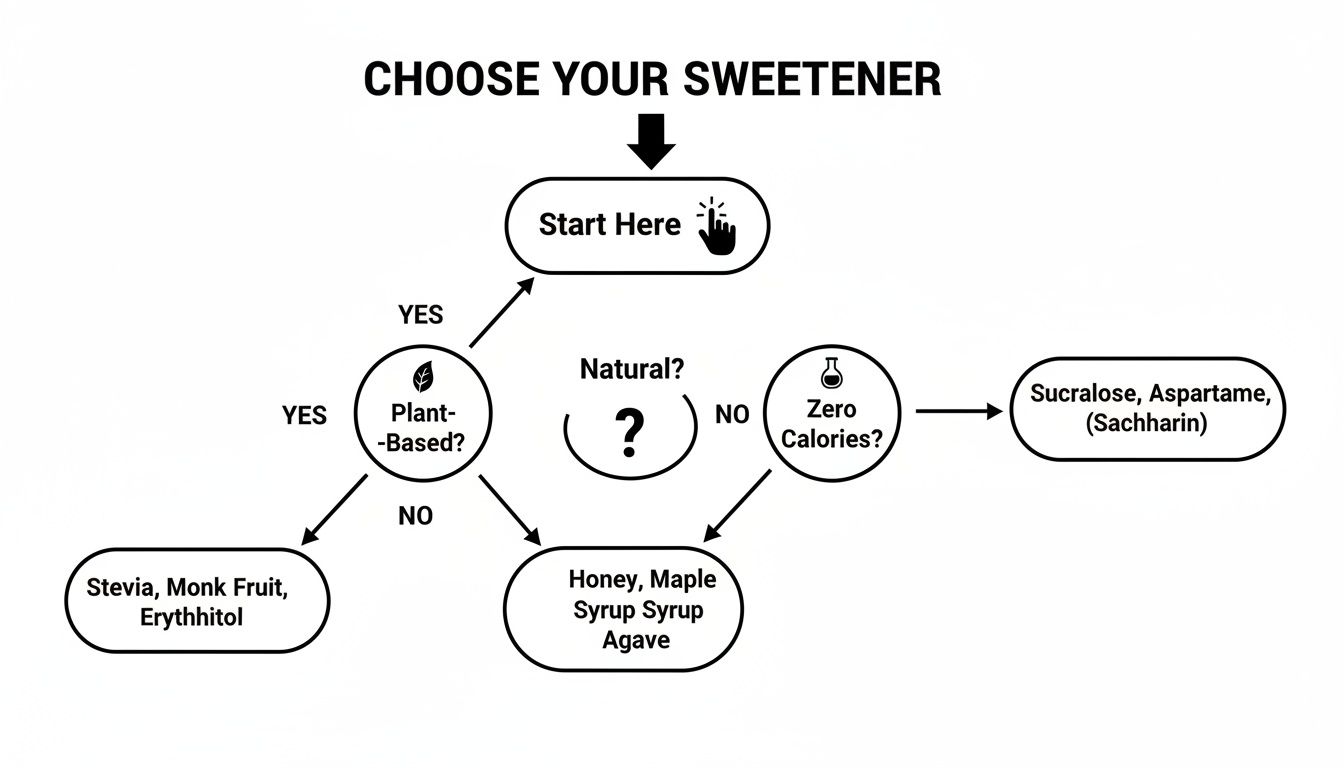
As you can see, the path usually starts with a simple question: natural or not? From there, you can zero in on great options like stevia or monk fruit.
For Athletic Performance and Muscle Recovery
When peak performance is the name of the game, timing and absorption speed are everything. After a tough workout, your muscles are screaming for amino acids. They need them to kickstart the repair and growth process.
Whey Protein Isolate: This is the undisputed champion for rapid recovery. It’s filtered to strip out most of the fats and lactose. It delivers a potent dose of protein that your body can absorb almost instantly. Look for versions sweetened with stevia or monk fruit to keep the formula clean.
Casein Protein: On the flip side, casein is a slow-and-steady protein. It forms a gel in the stomach. It releases a steady stream of amino acids over several hours. This makes it a perfect nightcap to prevent muscle breakdown while you sleep.
For serious athletes, using both fast and slow proteins is a game-changer. Whey isolate gives you that immediate post-workout spike, while casein offers sustained support. It’s a powerful one-two punch for muscle synthesis and recovery.
If you have highly specific goals, like training for an endurance race, dig into resources. Learning about effective marathon training nutrition plans can offer deeper insights into timing your macronutrients just right.
For Weight Management and Satiety
If managing your weight is the main goal, you need a protein that makes you feel full. This helps curb cravings and prevents overeating later on.
Some protein powders work a lot like meal supplements. They help you control calorie intake while still getting vital nutrients. If you want to dive deeper into that topic, we have a guide. It breaks down the difference between a meal replacement versus a protein shake.
Egg White Protein: This is a fantastic low-carb, dairy-free choice. It digests at a moderate pace. This is great for keeping hunger locked down for longer. Plus, it's a complete protein with all nine essential amino acids.
Plant-Based Blends: A smart mix of pea and rice protein creates a complete amino acid profile. This profile rivals whey. These blends are also often high in fiber. That is a huge bonus for feeling full and supporting a healthy gut.
For Digestive Health and Easy Absorption
For anyone with a sensitive stomach, the wrong protein powder can spell disaster. Think bloating, gas, and discomfort. Picking a formula that's gentle and easy to digest is absolutely crucial.
Hydrolyzed Whey Protein: This is essentially "pre-digested" whey. The protein chains are broken down into smaller pieces. This allows for lightning-fast absorption. It's one of the easiest dairy-based proteins on the digestive system.
Pea and Rice Protein: These plant-based options are naturally hypoallergenic. They are kind to the gut. They're free from common irritants like lactose. This makes them a safe bet for anyone prone to digestive issues.
For Allergies and Dietary Restrictions
Navigating the protein aisle with allergies can feel like walking through a minefield. But clean, transparent labels make it much easier. You just have to pay close attention to the source. Also look for any cross-contamination warnings.
- Dairy-Free: You've got plenty of options. Egg white, pea, rice, hemp, and soy proteins are all great dairy-free alternatives.
- Soy-Free: If you're avoiding soy, you can stick with whey, casein, egg, pea, or rice protein powders.
- Gluten-Free: Most single-ingredient protein powders are naturally gluten-free. To be 100% sure, always look for a "Certified Gluten-Free" seal, especially with blended formulas.
To make things even clearer, let's break down which protein and sweetener types are best suited for different wellness objectives.
Protein Comparison for Specific Health Goals
| Goal | Recommended Protein Source(s) | Ideal Sweetener Type | Key Features to Look For |
|---|---|---|---|
| Muscle Gain & Recovery | Whey Isolate, Casein, Egg White | Stevia, Monk Fruit, or Unsweetened | High BCAA content, fast or slow absorption rate depending on timing. |
| Weight Management | Plant-Based Blends (Pea/Rice), Egg White | Stevia, Monk Fruit | High fiber content, low carb/fat, promotes satiety. |
| Digestive Sensitivity | Hydrolyzed Whey, Pea, Rice | Unsweetened, Stevia, Monk Fruit | Hypoallergenic, lactose-free, easily digestible (hydrolyzed). |
| Plant-Based Lifestyle | Pea, Rice, Hemp, Soy Blends | Stevia, Monk Fruit, Erythritol | Complete amino acid profile (from blends), organic, non-GMO. |
By carefully matching the right protein source and sweetener to your unique goals and dietary needs, you can ensure your supplement is actually working for you, not against you.
A Detailed Comparison of Natural Protein Sources
When you’re looking for the best protein powder without artificial sweeteners, the protein source itself is just as crucial as what’s used to sweeten it. Different proteins have entirely different personalities. Figuring out which one fits your goals is key. From the quick-hitting power of whey to the slow-and-steady nature of plant blends, each has its place.
So, let's move beyond the basics and get into the nitty-gritty. We will explore the most popular clean protein sources. This is where we look at the subtle but critical differences in amino acid profiles. We also check how fast they digest and how they actually perform when you put them to work.
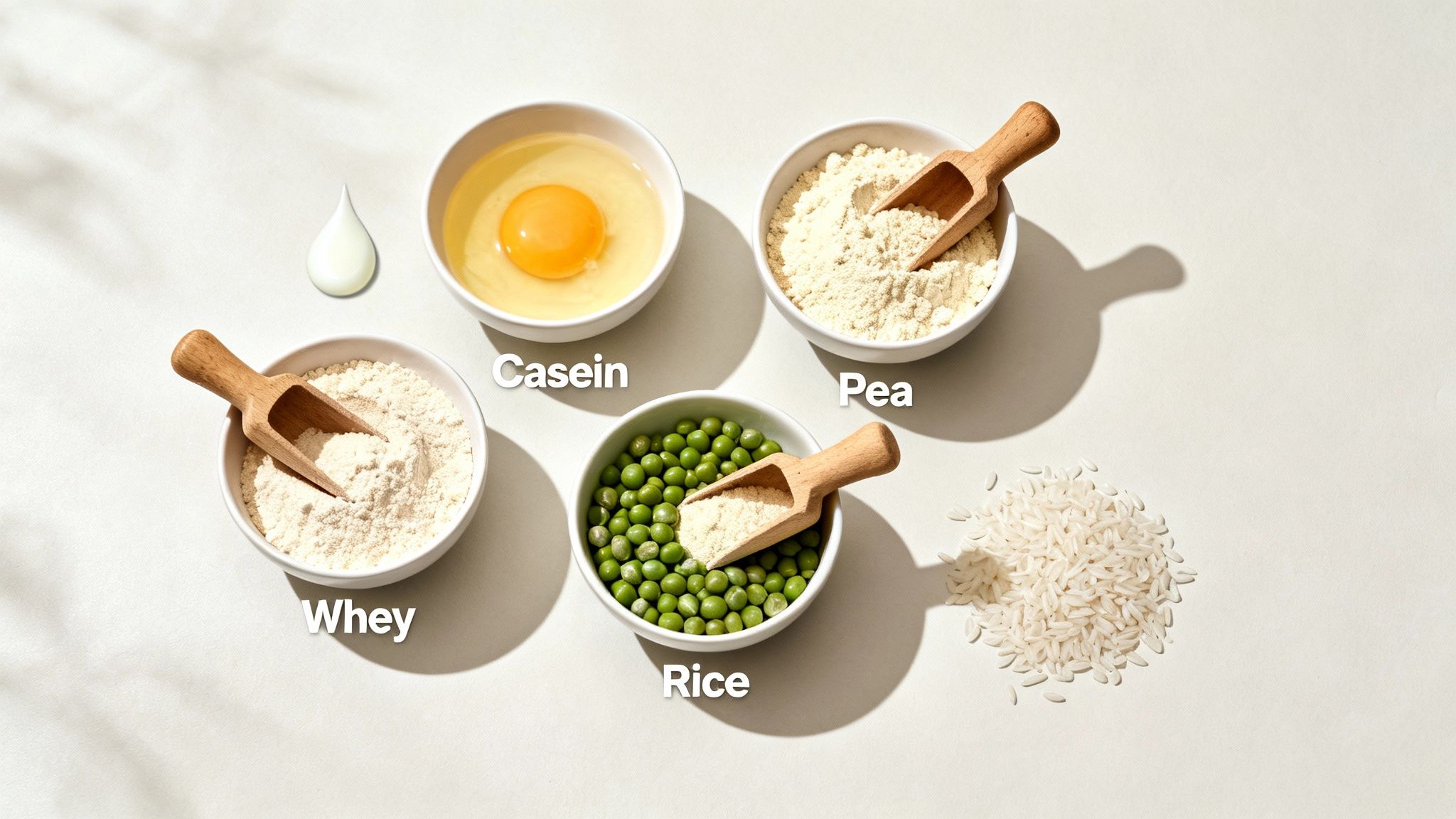
Whey Protein Concentrate and Isolate
For years, whey has been the go-to for muscle repair, and for good reason. It boasts a complete amino acid profile packed with branched-chain amino acids (BCAAs). If you're looking for a clean version, you'll mainly run into two types.
Whey Concentrate: Think of this as the less-processed cousin. It keeps more of the naturally occurring fats and lactose from milk. It’s a fantastic, budget-friendly option for general fitness. But if you're sensitive to lactose, you might want to steer clear.
Whey Isolate: This version goes through extra filtering to strip out most of the lactose and fat. The result is a purer protein, often clocking in at 90% or more. This makes it a top-tier choice for serious post-workout recovery or for anyone with even mild dairy issues.
Key Differentiator: It really all comes down to processing. Isolate absorbs faster and has next to no lactose, which is why competitive athletes and people needing a pure, fast-acting protein swear by it.
Casein Protein: The Slow-Release Champion
While whey hits your system fast, casein takes its time. It actually forms a gel in your stomach. This slows digestion way down. It feeds your muscles a steady drip of protein for hours.
This unique slow-burn makes casein the perfect pre-bedtime ritual. A scoop at night can help prevent muscle breakdown while you sleep. This fuels recovery around the clock. Naturally sweetened versions often have a thick, creamy texture. This is great for making protein pudding or a shake that actually feels substantial.
Egg White Protein
If you're dodging dairy altogether, egg white protein is an incredible alternative. It's a complete protein. This means you get all nine essential amino acids needed to kickstart muscle protein synthesis.
Digestion-wise, it lands right in the middle—slower than whey but faster than casein. This balanced release rate makes it a versatile player you can use anytime. It supports muscle maintenance and keeps hunger at bay. Its low-carb and low-fat profile is a huge plus for many. To dive deeper, you might want to check out our guide on the benefits of egg white protein.
Plant-Based Proteins: A Closer Look
The plant protein world is so much more than just soy these days. Modern formulas are cleverly designed. They often blend multiple sources to build a complete amino acid profile. This profile can stand toe-to-toe with animal-based options.
Pea Protein: This is a powerhouse for muscle building. It has a high BCAA content (especially arginine). It's also hypoallergenic and pretty easy on the stomach for most people.
Rice Protein: Brown rice protein is the perfect partner for pea. It fills in the gaps. It is high in cysteine and methionine. Pea protein is a bit low in these amino acids.
Hemp Protein: Hemp is more of a whole-food option. It delivers a solid dose of protein. It also brings healthy omega-3 and omega-6 fats and fiber to the table. It's not as protein-dense as an isolate. But its overall nutritional profile is fantastic.
For most people going plant-based, a high-quality blend of pea and rice protein is the smartest move. This combo ensures you get a complete array of essential amino acids in the right amounts. This makes it a seriously effective protein source for vegans and omnivores alike. When sweetened naturally with monk fruit or stevia, these blends have a smooth, earthy taste. They are a great addition to smoothies and recipes.
Practical Tips for Using Naturally Sweetened Protein
So you’ve found a great protein powder without artificial sweeteners. That's the first win. But making it work for you day-to-day is the real goal. Let's be honest, some natural powders can taste a little… different. They don't always mix as easily as their artificially sweetened counterparts, either.
The good news is that these are easy problems to solve. Switching to a cleaner protein doesn't mean you have to choke down gritty shakes or bland flavors. It’s really just a matter of knowing how to work with these more natural ingredients. This way you get a result you'll actually enjoy.

Mastering Mixability and Texture
Let's tackle the most common complaint first: grittiness. A clumpy shake is nobody's idea of a good time. But it’s often an easy fix. This is especially true with plant-based proteins, which can be notorious for this.
Your best weapon against clumps is a blender. A quick blitz is far more effective than a shaker bottle. It helps you achieve that perfectly smooth, silky consistency.
Pro Tip: Always add your liquid to the blender before the powder. Follow that with any other ingredients like fruit or ice. This simple step prevents the powder from cementing itself to the bottom of the container and guarantees a better mix.
If you're stuck with a shaker bottle, don't despair. Try these tricks:
- Make sure you're using a blender ball; it really does help break things up.
- Try using room-temperature liquid first. Ice-cold water can sometimes cause the powder to seize up and resist dissolving.
- Give it a good, hard shake for at least 30-45 seconds. You need that extra agitation to get everything fully incorporated.
Enhancing the Flavor Profile
Natural sweeteners like stevia and monk fruit don't taste exactly like sugar or sucralose. Some people notice a slight aftertaste. Or they find the sweetness level isn't quite what they're used to.
The key is to stop thinking of your protein shake as a finished product. Start treating it like a base ingredient. A few healthy additions can completely transform the taste. They can also add even more nutritional value.
Here are a few simple ideas:
- To dial up the sweetness: A half-banana (frozen works great for a thicker shake), a handful of berries, or even a small dash of pure maple syrup.
- To add creaminess and richness: Blend in a spoonful of almond butter, a quarter of an avocado, or a splash of full-fat coconut milk.
- To brighten the flavor: A squeeze of fresh lemon juice or a few mint leaves can cut through any earthy notes and add a welcome zing.
Creative Ways to Use Your Protein Powder
Think beyond the post-workout shake! Weaving your protein powder into meals and snacks is a fantastic strategy. You can hit your daily protein targets without feeling like you're constantly chugging supplements.
Breakfast is the perfect place to start. Adding protein to your first meal of the day is known to improve satiety. It helps you feel full and focused all morning long.
You can easily stir a scoop of vanilla or unflavored protein into oatmeal or Greek yogurt. If you want to get a bit more creative, try using it in baking. For some inspiration, check out our guide to making the best protein pancakes you'll ever try. It's an incredible way to turn a weekend treat into a muscle-building meal.
Our Top Picks: Finding the Right Clean Protein Powder for You
Choosing the best protein powder without artificial sweeteners isn't about finding a single "best" brand. It's about finding the right one for your body and your goals. The perfect choice for a competitive athlete focused on recovery will look very different. A busy professional needs a quick, gut-friendly meal.
This demand for clean, tailored nutrition is reshaping the market. The global protein powder industry is currently worth $24.6 billion. It is expected to hit $46.2 billion by 2034. A huge driver of this growth is the consumer shift away from artificial additives. In fact, searches for natural options have jumped by 42% year-over-year. You can dive deeper into these market trends for artificial sweeteners on StraitsResearch.com.
Let's break down our recommendations based on real-world scenarios.
For the Competitive Athlete
Your priority is all about performance. You need fast-acting protein for immediate muscle repair and recovery. You want this without any digestive drag slowing you down.
- Recommended Category: Hydrolyzed Whey Isolate sweetened with stevia.
- Why It Works: Hydrolyzed whey is essentially pre-digested. This means it delivers amino acids to your muscles faster than any other protein source. Pairing it with stevia gives you clean sweetness without adding carbs or calories. This keeps your nutrition precise and effective.
For Weight Management with Sensitivities
If you're focused on weight management, you may also struggle with dairy. Or perhaps you have a sensitive stomach. You need a protein that keeps you full and is easy to digest.
- Recommended Category: A Plant-Based Blend (Pea & Rice) sweetened with monk fruit.
- Why It Works: Blending pea and rice protein creates a complete amino acid profile, just like whey. The added fiber helps you feel satisfied for longer. This is great for managing cravings. Monk fruit provides a clean, sugar-like taste that many people prefer over stevia. It rarely has an aftertaste. If you're exploring unique plant-based formulas, our Four Sigmatic protein powder review is worth a look.
The best protein powder is the one you’ll actually use consistently. Your "why"—be it speed, satiety, or digestive comfort—should always guide your choice, not just a brand name.
For the Busy Professional
You need something simple, convenient, and versatile. Your protein has to fit seamlessly into a hectic schedule. It must provide a nutritional boost without any fuss.
- Recommended Category: Unflavored Egg White Protein.
- Why It Works: Egg white protein is a fantastic dairy-free, complete protein source. It has a very neutral flavor. This is its superpower. You can stir it into almost anything—coffee, oatmeal, yogurt, or a smoothie. It provides a high-quality protein hit that won't mess with the taste of your food.
Frequently Asked Questions
When you're cleaning up your supplement routine, a few questions always pop up. They are especially around ingredients, taste, and price. Let's clear the air on some of the most common things people wonder about. This is for choosing a protein powder without artificial sweeteners.
Are Natural Sweeteners Like Stevia and Monk Fruit Safe?
Yes, for the most part. Both stevia and monk fruit have the FDA's "generally recognized as safe" (GRAS) designation. They come from plants and have zero calories. They won't spike your blood sugar. That is why they've become so popular.
That said, everyone's body is different. Some people find they have digestive issues. But that's often due to sugar alcohols like erythritol. These are sometimes blended with the main sweetener. If you're trying one for the first time, just start with a small amount and see how you feel.
Why Does My Naturally Sweetened Protein Taste Different?
The taste difference comes down to chemistry. Natural sweeteners don't have the same molecular structure as sugar. They also differ from artificial options like sucralose. So, they hit your tastebuds differently. Stevia can sometimes leave a slightly bitter or licorice-like aftertaste. Monk fruit tends to be cleaner but less intensely sweet.
Don't forget the protein source itself plays a major role. Whey, casein, pea, and egg white proteins all have their own distinct underlying flavors. Brands are getting better at masking this. But you should expect a difference. It's perfectly normal.
A key takeaway is that an "earthy" or less intensely sweet taste often signals a cleaner, less processed product. Learning to appreciate this subtle difference is part of transitioning to a more natural supplement regimen.
Is Unflavored Protein Powder a Good Alternative?
Absolutely. Unflavored is a fantastic option if you want total control. It's the ultimate blank canvas. It lets you add a clean protein boost to almost anything without messing with the taste.
You can mix it into smoothies, oatmeal, yogurt, or even savory dishes like soups and sauces. This way, you decide how sweet it is. You can use whole fruit or a touch of maple syrup. You can even add a few drops of liquid stevia to get it just right.
Are Protein Powders Without Artificial Sweeteners More Expensive?
They often are, and it usually boils down to the quality of the ingredients inside. Sourcing premium components like grass-fed whey costs manufacturers more. The same is true for organic plant proteins and pure monk fruit extract.
That investment in cleaner, more carefully sourced ingredients trickles down to the final price. For many people, paying a little extra is a fair trade-off. It provides a product that aligns with their health goals. It also skips the synthetic additives found in cheaper options.
You may also find this Nutrition Geeks guide helpful: Herbalife Malaysia Price List 2020: A Comprehensive Review for Wellness Seekers.
You may also find this Nutrition Geeks guide helpful: Discover Herbalife Life Near Me: Your Guide to Local Nutrition Clubs and Distributors.
You may also find this Nutrition Geeks guide helpful: Unlock Your Wellness Journey: Expert Tips & Benefits of Herbalife Products Online.
Frequently Asked Questions
Why avoid artificial sweeteners in protein powder?
Some people avoid artificial sweeteners because of taste preference, digestive tolerance, or a desire for simpler ingredients.
What sweeteners are common in cleaner protein powders?
Monk fruit, stevia, coconut sugar, or unsweetened formulas are common alternatives, depending on the product.
Looking for the Best Wellness Products?
Compare our top supplement reviews, recovery products, daily wellness essentials, protein picks, vitamins, and metabolism support guides all in one place.
Explore Wellness Shop →