Disclosure: This post may contain affiliate links, meaning if you decide to make a purchase through my links I may earn a commission at no additional cost to you. See my disclosure for more info.
Combat fitness in 2026 isn’t just for soldiers or first responders—it’s for anyone who wants to be ready for anything life throws at them. You don’t need a fancy gym or high-tech gadgets to get started. It’s about building strength that actually matters, moving better, and staying tough when things get hard. Whether you’re a beginner or looking to take your training up a notch, this guide will help you understand what really counts in combat fitness, how to train smarter, and what to look for in a coaching system.
Key Takeaways
- Combat fitness goes beyond looking strong—it’s about being able to perform in real situations.
- Modern training focuses on functional movement, not just traditional gym exercises.
- A good foundation includes building full-body strength, endurance, and a strong core.
- Choosing the right coaching system means finding one that fits your real life, not just a hard workout.
- Mental toughness is just as important as physical strength for true tactical readiness.
Understanding The Core Principles Of Combat Fitness
Beyond Aesthetics: The True Purpose Of Tactical Strength
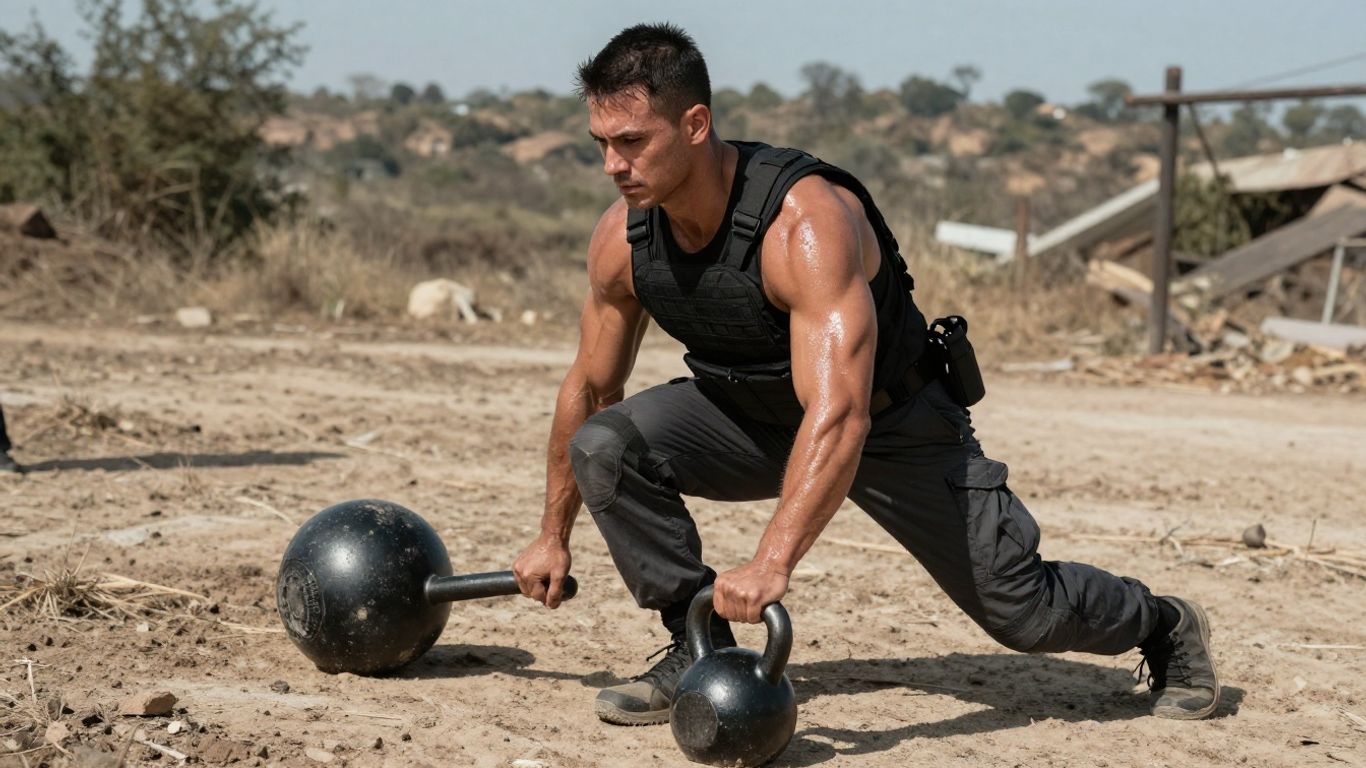
If you think combat fitness is all about looking good in a uniform, it’s time to reset your thinking. Combat fitness is about being ready for real problems—carrying heavy loads, sprinting under pressure, or hauling a teammate to safety. Unlike regular gym routines focused on muscle tone, tactical strength is practical by design. Every rep, every exercise, should relate back to surviving and thriving in the unpredictable situations military or emergency jobs throw at you.
Explore more NutritionGeeks guides related to wellness, recovery, nutrition and active lifestyle support.
- Practical strength means lifting awkward, heavy stuff (not just barbells).
- Endurance has to last under stress—think hours on your feet, not just a few quick laps.
- Quick reactions and power matter as much as ongoing strength.
Forget the mirror. Combat fitness is about doing tough stuff when it really counts, not just looking the part when you’re off duty.
The Evolution Of Military Fitness Standards
The way tactical athletes train has changed a lot, especially in the last decade. It’s not just push-ups and a two-mile run anymore. The U.S. Army, for example, replaced its old test because it left too many gaps for what soldiers actually face. Now, there’s a broader approach—one that measures true operational readiness and real-world toughness. Check out the difference:
More NutritionGeeks Wellness Guides
Explore more NutritionGeeks guides connected to wellness, recovery, hydration, energy, sleep and active lifestyle nutrition.
| Old Fitness (APFT) | Modern Fitness (ACFT) |
|---|---|
| Push-ups | Deadlift |
| Sit-ups | Power throw |
| 2-mile run | Sprint-drag-carry shuttle |
| Leg tuck, Plank, 2-mile run |
This shift means that if your workouts aren’t covering these practical areas, you’re missing out. Programs built around progressive overload and functional movements help you stay operational, adaptable, and injury-resistant, as outlined in this fitness playbook for warfighters.
Functional Movement For Real-World Demands
Shiny equipment and complicated routines aren’t requirements for true tactical preparation. What actually matters is how you move: can you lift, drag, sprint, crawl, and climb? These are the motions that really matter in the field. Here are some staples of movement-based combat workouts:
- Bodyweight training (you, your gear, and gravity)
- Calisthenics for agility and durability
- Weighted carries, sleds, and rucking for toughness
You want your training to mirror actual challenges. Run with weight, get down and up off the ground, vault barriers, carry something awkward and heavy. That’s how you bulletproof your body for whatever your mission throws at you.
At the end of the day, understanding these principles isn’t just for professionals—it’s also the best way for everyday folks to upgrade their own strength and readiness, even outside military life.
Building A Foundation For Tactical Readiness
Tactical strength isn’t just about how much you can lift at the gym. It’s what lets you push through long days in the field, recover from tough missions, and move with confidence when it really counts. If you want to be genuinely ready, you need to lay down a base that covers all your needs: strength, movement, and thoughtful progression.
Essential Army PT Workouts For Beginners
When you first step into tactical training, it helps to use a simple structure. Army PT (Physical Training) basics cover a lot more ground than just pushups and sit-ups. Here’s what a weekly plan for beginners might look like:
| Day | Workout Type | Focus |
|---|---|---|
| Monday | Bodyweight Circuit | Strength/Mobility |
| Tuesday | Cardio (Run/Ruck) | Endurance |
| Wednesday | Core & Flexibility | Stability |
| Thursday | Full-Body Weights | Strength |
| Friday | Mixed Cardio | Stamina |
Starting simple and consistent beats trying to do everything at once. If you’re new, don’t worry as much about the numbers right away. Get in the habit, and aim for clean form over counting reps.
Prioritizing Strength For Operational Capability
Strength helps you keep moving in stressful moments. But it’s not just about maxing out a barbell. Tactical strength is closer to being physically stubborn—lifting awkward gear, dragging a buddy to safety, or carrying packs for miles.
- Focus on compound exercises (squats, deadlifts, pull-ups, presses)
- Mix in loaded carries (farmer’s walks, rucks, sled drags)
- Use full range of motion—partial reps won’t save you out there
- Make sure you recover—overdoing it every week actually slows your progress
Building operational strength isn’t a sprint; it’s more of a steady march. Trying to skip steps will just have you circling back to patch up old weaknesses.
Developing Full-Body Strength And Core Stability
Your core connects everything you do. It’s the base for powerful movement and injury prevention. But it’s not just abs. Stability means glutes, back, obliques, and even grip—all working to keep you steady.
Try these staples for a well-rounded routine:
- Turkish get-ups: Full-body, coordination, and real-world function
- Plank variations: Front, side, and loaded planks
- Unilateral work: Single-leg squats, one-arm rows to fix imbalances
- Rotational movements: Russian twists, landmine presses, medicine ball throws
Don’t underestimate the effect these can have on every other part of your training. Strong, stable, and balanced is more important than having the biggest bench press.
In the end, if you show up for the basics and get them right, you’ll be surprised how far you can go—even on your longest days.
Key Training Modalities For Combat Fitness

Dialing in the right training for tactical fitness isn’t just about doing more push-ups or running extra miles. The modalities you pick shape not just your performance on a PT test, but also how ready you are for the hard days—rain, stress, heavy gear, and all. Let’s break down the core elements that give your training that tactical edge.
Strength Endurance And Durability Training
Strength endurance is the backbone of any combat fitness plan. You’re not training to impress in the gym; you’re training to haul gear, buddy carry, and last on your feet when fatigue sets in.
- Work capacity circuits: Combine exercises like deadlifts, sandbag carries, pull-ups, and lunges for time or max rounds.
- Tempo work: Slowing down push-ups and squats builds resilience as well as muscle.
- Rotational and odd-object lifts keep things unpredictable—just like operational demands.
| Exercise | Recommended Load | Target Reps | Sets |
|---|---|---|---|
| Sandbag Carry | 50-70 lbs | 60 sec | 4 |
| Pull-Ups | Bodyweight | Max | 3 |
| Deadlift | 60-70% 1RM | 10-12 | 4 |
Consistent strength-endurance sets the stage for everything else: speed, agility, and even injury prevention all rely on being able to push through fatigue.
Optimizing Running And Rucking Performance
You can’t skip running and rucking if tactical fitness is your priority. But there’s more to it than just slogging through miles.
- Mix interval sprints, mid-distance runs, and slow rucks into your weekly plan.
- Use a progression system—boost mileage gradually to avoid overuse injuries.
- Don’t forget technique: adjusting stride or posture saves your legs and your lower back.
| Modality | Frequency | Intensity Tips |
|---|---|---|
| Running | 2-4x/week | Intervals & distance blend |
| Rucking | 1-2x/week | Start at 25lbs, build to 40lb |
Even moderate weekly rucking can make a real difference in hip and core stability.
Integrating Swimming For Water-Based Readiness
If your operational environment might involve water, swimming is a non-negotiable. But even if it’s not required, swimming can fix holes in your training: it works lungs, builds muscle endurance, and hammers the core without the pounding of roadwork.
- Alternate technique drills with long, steady swims for endurance.
- Add gear (fins, weighted vests) only after you’re fully comfortable in the water.
- Try interval-based workouts like 10 x 100m sprints with controlled rest.
Many athletes find their greatest improvements in work capacity come from adding one swim session each week—plus, it’s a welcome break from the usual bruises and blisters.
Remember: Progress isn’t only about hitting harder numbers; it’s about making every session count for the unpredictable, high-stress world outside the gym.
Selecting The Right Combat Fitness Coaching System
Alright, so you’ve been hitting the workouts, maybe you’re getting a handle on the basics, but now you’re thinking about the next step. How do you actually pick a coaching system that’s going to work for you? It’s not just about finding someone who yells the loudest or has the coolest gear. We need to get smart about this.
Defining Your Specific Tactical Goals
First things first, what are you actually trying to achieve? This sounds obvious, but it’s where most people stumble. Are you aiming for general readiness, like being able to handle whatever the military throws at you, or are you prepping for something super specific, like a special ops pipeline? Maybe you just need to get better at running and rucking without getting injured. Or perhaps you’re trying to drop some body fat but still need to perform at a high level. Knowing your main goal helps narrow down the field a lot.
Here are some common goals tactical athletes have:
- General Tactical Performance: Boosting overall strength, conditioning, and durability.
- Selection/Pipeline Prep: Getting ready for specific military or law enforcement roles.
- Running/Rucking Improvement: Focusing on these key skills without sacrificing other areas.
- Body Composition: Losing fat or gaining muscle while maintaining performance.
- Rebuilding: Getting back on track after injury or a break.
- Long-Term Maintenance: Staying ready year-round without burning out.
Evaluating Coaching Systems Over Individual Coaches
It’s easy to get swayed by a coach’s personality. You might find someone you really click with, and that’s great. But for tactical fitness, the system they operate within is way more important than just their vibe. A good system has structure, a clear path for progression, and the flexibility to adapt when life gets messy. Think about it: a coach might be awesome, but if their training plan is rigid and doesn’t account for your shift work or deployments, it’s not going to last. You need a platform that can scale with you, offering different programs as your needs change. It’s about finding a complete package, not just a single workout plan. This is where a solid coaching system can really make a difference.
Matching Training To Your Real-World Constraints
This is a big one. Your life outside of training probably isn’t a perfectly scheduled gym session every day. You’ve got jobs, families, deployments, maybe limited equipment, or just plain old fatigue from life. The best coaching system won’t ignore these things; it’ll work with them. It should allow you to pivot between training styles, pick programs based on what you can actually do right now, and keep moving forward without having to start from scratch every time life throws a curveball. A system that offers different training lanes – like bodyweight-only options for when you’re deployed, or programs that integrate swimming if you’re in a maritime role – is gold. It needs to fit your reality, not the other way around.
The most effective tactical fitness coaching isn’t about the most intense workouts. It’s about finding a structured approach that aligns with your specific objectives, acknowledges the unpredictable nature of tactical life, and provides a clear, adaptable path for long-term development. Consistency and capability are the ultimate outcomes.
Advanced Training Strategies For Peak Performance
Alright, so you’ve built a solid base, you’re hitting your workouts, and you’re feeling pretty good. But what happens when you need to push past that plateau and really dial in your performance for those high-stakes situations? This is where we get into the nitty-gritty of advanced training, focusing on those specialized pathways and mental fortitude that separate the good from the truly elite.
Specialized Pathways For Elite Operators
For those aiming for the top tier, like special operations or highly demanding roles, generic training just won’t cut it anymore. You need programs that are laser-focused on the specific demands of your target. Think about it: someone preparing for water-based operations needs a different kind of conditioning than someone gearing up for land-based infiltration. Guided training systems often have specific tracks for these scenarios. For instance, programs designed for land-based special operations might heavily emphasize rucking and strength endurance, while water-focused training would integrate significant swimming and underwater conditioning. It’s about matching your training precisely to the mission profile. This targeted approach minimizes wasted effort and maximizes your readiness for the exact challenges you’ll face.
Hybrid Training For Comprehensive Fitness
Hybrid training is becoming the gold standard because it acknowledges that tactical athletes rarely operate in just one fitness domain. You need to be strong, fast, durable, and have serious stamina. Trying to excel in just one area often means neglecting others, which can be a weak point when it matters most. A good hybrid program blends elements like strength training, high-intensity interval training (HIIT), running, and rucking in a way that complements each other. The trick is to balance the load so you’re not constantly overtraining one system. For example, you might have a heavy lifting day followed by a moderate conditioning session, or a long run day with a focus on recovery and mobility. It’s about building a well-rounded athlete who can handle anything.
Mental Toughness And Grit Development
Let’s be real, the physical stuff is only half the battle. The other, arguably more important, half is what’s going on between your ears. Advanced combat fitness isn’t just about building muscle and lung capacity; it’s about building resilience. This means training your mind to perform under pressure, to push through discomfort, and to maintain focus when everything is going wrong. Techniques like visualization, controlled exposure to stress (like cold showers or intense workouts that push you to your limit), and practicing mindfulness can make a huge difference. Developing this grit is what allows you to keep going when your body is screaming to stop. It’s about knowing you can handle more than you think you can, a key aspect of cognitive resilience.
Here’s a look at how different training elements can be combined:
- Strength Endurance: Focus on higher rep ranges (15-25 reps) with moderate weight, or circuit training to build the capacity to perform strength-based tasks repeatedly.
- Aerobic Capacity: Incorporate long, steady-state runs and rucks, alongside interval training, to improve your ability to sustain effort over extended periods.
- Work Capacity: High-intensity efforts, like sprints or intense circuit workouts, to improve your ability to recover quickly and perform bursts of high output.
- Durability: Focus on injury prevention through mobility work, proper warm-ups and cool-downs, and listening to your body to avoid burnout.
Pushing your limits in training, especially when it feels uncomfortable or difficult, is where true growth happens. It’s not about seeking out pain, but about learning to manage discomfort and discovering your capacity to perform when the stakes are high. This mental conditioning is just as vital as any physical drill.
Conclusion: Stick With It and Keep It Real
At the end of the day, combat fitness isn’t about chasing trends or looking tough on Instagram. It’s about building the kind of strength and grit that actually matters when things get rough—whether you’re in uniform or just want to be ready for whatever life throws at you. The workouts and tips we covered here aren’t magic bullets, but if you put in the work and stay consistent, you’ll see real changes. Don’t stress about being perfect or following every program to the letter. Find what fits your goals and your life, and keep showing up. That’s how you build tactical strength that lasts, not just for 2026, but for the long haul. So lace up, get after it, and remember—progress beats perfection every time.
Frequently Asked Questions
What’s the main goal of combat fitness training?
Combat fitness training isn’t just about looking strong. It’s about building your body and mind to handle tough situations, like carrying heavy gear, moving quickly when needed, and staying tough when things get hard. It’s about being ready for real-world challenges.
How is combat fitness different from regular gym workouts?
Regular workouts might focus on how you look, but combat fitness focuses on what your body can *do*. It uses movements that are useful in tough situations, like lifting, running, and carrying things, instead of just isolating muscles. Think practical strength over just big muscles.
What kind of exercises are common in combat fitness?
You’ll see a lot of exercises that work your whole body and get you strong for tasks. This includes things like running, carrying heavy packs (rucking), doing pull-ups and push-ups, lifting weights, and core exercises to keep you stable. Some programs also include swimming for water skills.
Do I need a coach to do combat fitness?
While you can start on your own, a good coach or a structured training system can make a big difference. They help you learn the right way to train, avoid injuries, and make sure you’re working towards your specific goals, like preparing for military selection or just getting generally tougher.
How long does it take to get ready for tough physical tests?
Getting truly ready usually takes time, often 6 to 12 months of steady, planned training. It’s not a quick fix. Shorter timelines might work if you have expert guidance and are very disciplined with your training and recovery.
What’s the biggest mistake people make when training for combat fitness?
The most common mistake is training randomly without a clear plan. Success comes from a well-thought-out program that builds skills step-by-step, focuses on consistency, and adapts to your needs and life. Just working out hard without a strategy often doesn’t lead to the best results.
- Best Supplement Bundle for Healthy Digestion and Bloating
- Best Supplement Stack for Daily Inflammation Support
- Best Daily Supplements for Runners Health: What Matters Most
- Best Supplement Stack for Inflammation and Recovery
- Best Wellness Stacks for Active Lifestyles: A Practical Guide
- Best Supplement Stack for Runners Recovery
- Best Marathon Recovery Supplement Stack for Faster Repair
- Magnesium Glycinate Benefits for Women: Sleep, Calm, and Cycle Support
You may also find this Nutrition Geeks guide helpful: Mastering Qassatat: A Guide to Traditional Maltese Pea and Ricotta Pies.
You may also find this Nutrition Geeks guide helpful: Fasolada: The Heartwarming Greek Bean Soup You Need to Try.
You may also find this Nutrition Geeks guide helpful: Explore Herbalife Products and Prices: Your Guide to Wellness Options.
You may also find this Nutrition Geeks guide helpful: Understanding and Managing Feet Swelling After Flying: Causes and Solutions.
You may also find this Nutrition Geeks guide helpful: Unveiling the Benefits: What is Herbalife Aloe Concentrate Good For?.