Disclosure: This post may contain affiliate links, meaning if you decide to make a purchase through my links I may earn a commission at no additional cost to you. See my disclosure for more info.
Back to NutritionGeeks Recipes
Picture a bright green Granny Smith apple, crisp and tart with every bite. Its sharp flavor makes it a top pick for snacks, but those qualities also boost its nutrition profile. You get low calories and high fiber, which help with weight goals, steady blood sugar, and gut health.
That’s why granny Smith apple nutrition facts matter for smart eating much like honeycrisp apple nutrition facts.. One medium apple packs about 70 calories, 11 to 14 grams of carbs, and 2.6 to 5 grams of fiber per 100 grams raw with skin. Plus, it offers vitamin C, some vitamin A, and a low glycemic index around 36 to 40 for even energy.
Explore more NutritionGeeks guides related to wellness, recovery, nutrition and active lifestyle support.
In this post, you’ll find details on calories, carbs, fiber, sugars, key vitamins and minerals, and glycemic impact. We’ll also share simple ways to enjoy them daily. Keep in mind, numbers vary slightly by size or if you peel the skin, so eat raw with skin for the best benefits.
Granny Smith apple nutrition facts at a glance (with real serving sizes)
Looking for more details about apple pie nutrition facts?Granny Smith apple nutrition facts shine when you look at real portions. Many sources list stats per 100 grams, but your apple weighs more. A medium one tips the scale at about 167 grams raw with skin. That means numbers scale up.
More NutritionGeeks Wellness Guides
Explore more NutritionGeeks guides connected to wellness, recovery, hydration, energy, sleep and active lifestyle nutrition.
Here’s a clear breakdown. These come from USDA data. Always eat the skin. It boosts fiber and plant compounds.
| Nutrient | Per 100 grams (raw, with skin) | Per medium apple (167 grams) |
|---|---|---|
| Calories | 58 | 97 |
| Carbs | 14 grams | 23 grams |
| Fiber | 2.8 grams | 4.7 grams |
| Sugars | 10 grams | 17 grams |
| Protein | 0.4 grams | 0.7 grams |
| Fat | 0.2 grams | 0.3 grams |
| Potassium | 120 mg | 200 mg |
Net carbs equal total carbs minus fiber. For 100 grams, that’s 14 grams minus 2.8 grams, or about 11 grams. Your body digests less because fiber slows things down. This keeps blood sugar steady
You see low calories and solid fiber. Potassium supports muscles too. But why do labels differ from apps?
Per 100 grams vs. one medium apple, why the numbers look different
Apps and packages often show per 100 grams. That’s standard for comparison. Yet your medium Granny Smith weighs 167 grams. So multiply by 1.67. Calories jump from 58 to 97. Carbs hit 23 grams.
Labels match apps sometimes. Other times, they use “one apple” without weight. Sizes vary by grower. A small one might weigh 130 grams. That drops calories to 75.
Tracking macros? Weigh your apple. Use a kitchen scale for accuracy. Or pick “medium apple” as a safe guess. It works most days.
Sliced cups add tricks. Air gaps between slices mean one cup weighs less than whole. Thick slices pack more. A cup often hits 109 grams. Always check your measure.
A quick look at smaller servings (slices, cups, and kid snacks)
Smaller bites fit snacks or kids. Scale from the basics. One cup sliced equals 109 grams. That’s 63 calories, close to a small apple.
Half a cup sliced weighs 55 grams. Expect 32 calories, 7 grams carbs, 2 grams fiber, and 5 grams sugar. Perfect for lunchboxes.
Kids love 4 to 6 slices. That’s often 50 grams. Around 29 calories, 1.5 grams fiber. Keeps it light and fun.
To scale portions, start with per 100 grams facts. Halve for 50 grams. Double for 200 grams. Apps help, but weigh for precision.
These servings show versatility. Add to yogurt or oatmeal. Fiber stays high. Sugars come natural. You control the amount.
In short, real sizes make tracking simple. Pick what fits your day.
Carbs, fiber, and sugar, what a tart apple really means for your body
Granny Smith apples taste sharp and less sweet than others. High malic acid levels, around 0.5 to 1% of the fruit’s weight, create that tart bite. Yet Granny Smith apple nutrition facts show they pack similar carbs to sweeter types: about 14 grams per 100 grams.
Fiber changes the game here. At 2.8 grams per 100 grams, it slows digestion. You feel full longer because it expands in your stomach. Sugars, around 10 to 10.5 grams per 100 grams, come from natural fruit sources. Water content and fiber dilute them, so they don’t hit hard.
Apples score low on the glycemic index, often 36 to 39. Fiber traps sugars, and acids like malic slow their release into blood. As a result, energy stays steady. This setup helps people who fight cravings, watch weight, or need even energy all day. Still, pair it right for best results.
Fiber (pectin) and digestion: why the skin matters
Fiber splits into two main types. Soluble fiber, like pectin in apples, dissolves in water. It forms a gel that softens stool and feeds good gut bacteria. Insoluble fiber does not dissolve. Instead, it adds bulk to push waste through faster.
Pectin shines in Granny Smiths. Most hides in the skin and flesh. It supports gut health by nurturing bacteria that aid digestion. Regular bowel movements follow because the gel keeps things moving smooth.
Eat the skin for max benefits. It holds half the fiber. Wash well under running water, then scrub gently. A medium apple’s skin boosts total fiber to 4.7 grams. Skip peeling, and you get plant compounds too.
In short, skin on means better digestion. Your gut thanks you.
Glycemic impact: are Granny Smith apples good for blood sugar?
Granny Smith apples fit well for blood sugar control. Their low GI of 36 to 39 means sugars release slow. Fiber and malic acid team up to prevent spikes. A whole medium apple raises levels gently compared to juice.
Pair it smart for even better results. Protein or fat slows absorption more:
- Spread peanut butter on slices for creamy contrast and steady energy.
- Add cheese for a savory crunch that lasts.
- Dip in yogurt to blend tartness with smooth protein.
Watch portions if carbs stay tight. One medium apple hits 23 grams total carbs, 18 net after fiber. That’s fine most days, but half works if needed.
Whole always beats juice. Juice lacks fiber, so sugars rush in fast. If you have diabetes, stick to your care plan. Chat with your doctor for personal tweaks
These combos keep you satisfied without crashes. Simple changes make a difference.
Vitamins, minerals, and antioxidants in Granny Smith apples
Granny Smith apple nutrition facts go beyond calories and fiber. These tart gems pack vitamins, minerals, and plant compounds that support daily health. Potassium leads at 120 mg per 100 grams, or about 200 mg in a medium apple. Vitamin C follows with 5 mg per 100 grams, a modest boost for immunity. Traces of vitamin K, vitamin E, and B vitamins round out the mix. Antioxidants shine too, especially polyphenols. They help combat oxidative stress when you eat a varied diet. No single food works miracles. These nutrients add up over time.
For quick reference, check this breakdown from USDA data. Numbers scale with size, so a 167-gram medium apple multiplies values by about 1.67.
| Nutrient | Per 100 grams (raw, with skin) | Per medium apple (167 grams) |
|---|---|---|
| Potassium | 120 mg | 200 mg |
| Vitamin C | 5 mg | 8 mg |
| Vitamin K | Trace (under 3 mcg) | Trace |
| Vitamin E | Trace (0.2 mg) | Trace |
| B Vitamins | Trace (B6 ~0.04 mg, folate trace) | Trace |
These amounts stay small compared to daily needs. Yet they contribute. Potassium aids muscle function. Vitamin C helps collagen for skin. Plant compounds target inflammation. Always pair apples with proteins or veggies for balance.
Potassium and heart support (plus what it does not do)
Potassium plays a key role in your body. It maintains fluid balance between cells and blood. Cells stay hydrated, and nerves fire properly. This mineral also relaxes blood vessel walls. As a result, it supports normal blood pressure levels.
One medium Granny Smith delivers 200 mg of potassium. That’s about 4% of your daily need. However, it won’t lower high blood pressure on its own. No fruit fixes that alone. Instead, make it part of a heart-smart pattern. Add leafy greens, bananas, or yogurt to meals. Exercise helps too. Over time, steady potassium intake from whole foods promotes better vessel health.
You control what you eat. Choose skin-on apples daily. They fit snacks or salads easily. Track intake if sodium runs high. Apps show your totals. Balance matters most.
Quercetin and other polyphenols: what makes Granny Smith stand out
Granny Smith apples feature polyphenols like quercetin. Their green skin boosts these compounds compared to red varieties. Data suggests levels match or exceed average apples.
Polyphenols act as antioxidants. They neutralize free radicals, those unstable molecules from pollution or exercise. This process curbs cell damage. Most concentrate in the skin, so don’t peel. A medium apple provides a solid dose alongside fiber.
These compounds may aid heart and brain health. They help tame inflammation from daily wear. Yet antioxidants shine in context. Eat them within varied meals, not as a cure. Veggies, berries, and nuts amplify effects. One apple adds gentle support. Enjoy it fresh for peak benefits.
In short, quercetin sets Granny Smiths apart. Bite into the skin. You get taste and subtle perks. Build habits around whole foods. Your body responds over weeks.
How Granny Smith compares to other apples (and how to choose the best one)
Granny Smith apples stand out with their tart snap, but Granny Smith apple nutrition facts match most varieties closely. Per 100 grams, they offer 52 to 58 calories, 13 to 14 grams carbs, 2.4 grams fiber, and about 10 grams sugars. Fuji, Gala, and Honeycrisp hit similar marks: 52 to 60 calories, same carbs and fiber, but sugars range from 11 to 14 grams. So nutrition stays steady across types. Yet Granny Smith’s high malic acid creates that sharp taste. It feels less sweet, which helps some folks snack without overdoing it.
Taste differs most. Granny Smith bites back with tartness; Fuji tastes sweetest and juiciest; Gala stays mildly sweet and tender; Honeycrisp mixes honey notes with crisp pop. Textures follow suit. Granny Smith stays firm longest. Honeycrisp explodes with juice. Fuji and Gala soften quicker. For cooking, Granny Smith excels in pies or crisps because it holds shape. Fuji works for sauce, Gala blends into salads, Honeycrisp shines raw or in oats.
Check this quick comparison from USDA data:
| Apple Type | Calories (per 100g) | Carbs (g) | Fiber (g) | Sugars (g) | Best For |
|---|---|---|---|---|---|
| Granny Smith | 52-58 | 13-14 | 2.4 | ~10 | Baking, salads |
| Fuji | 52-60 | 13-14 | 2.4 | 12-14 | Snacking, sauce |
| Gala | 52-57 | 13-14 | 2.4 | ~11 | Salads, raw |
| Honeycrisp | 52-60 | 13-14 | 2.4 | ~12 | Fresh eatin |
Pick the best Granny Smiths every time. Look for firm feel, smooth bright green skin, and no bruises or soft spots. Heavy ones pack more juice and nutrients. Color alone does not promise top nutrition or taste; check ripeness by firmness. Store them in the fridge crisper drawer. They last 4 to 6 weeks there. Room temperature shortens it to one week. Wash right before you eat to keep skin’s fiber and compounds intact. Avoid stacking near bananas; they speed ripening.
Best ways to eat Granny Smith apples for your goals (snacking, digestion, weight)
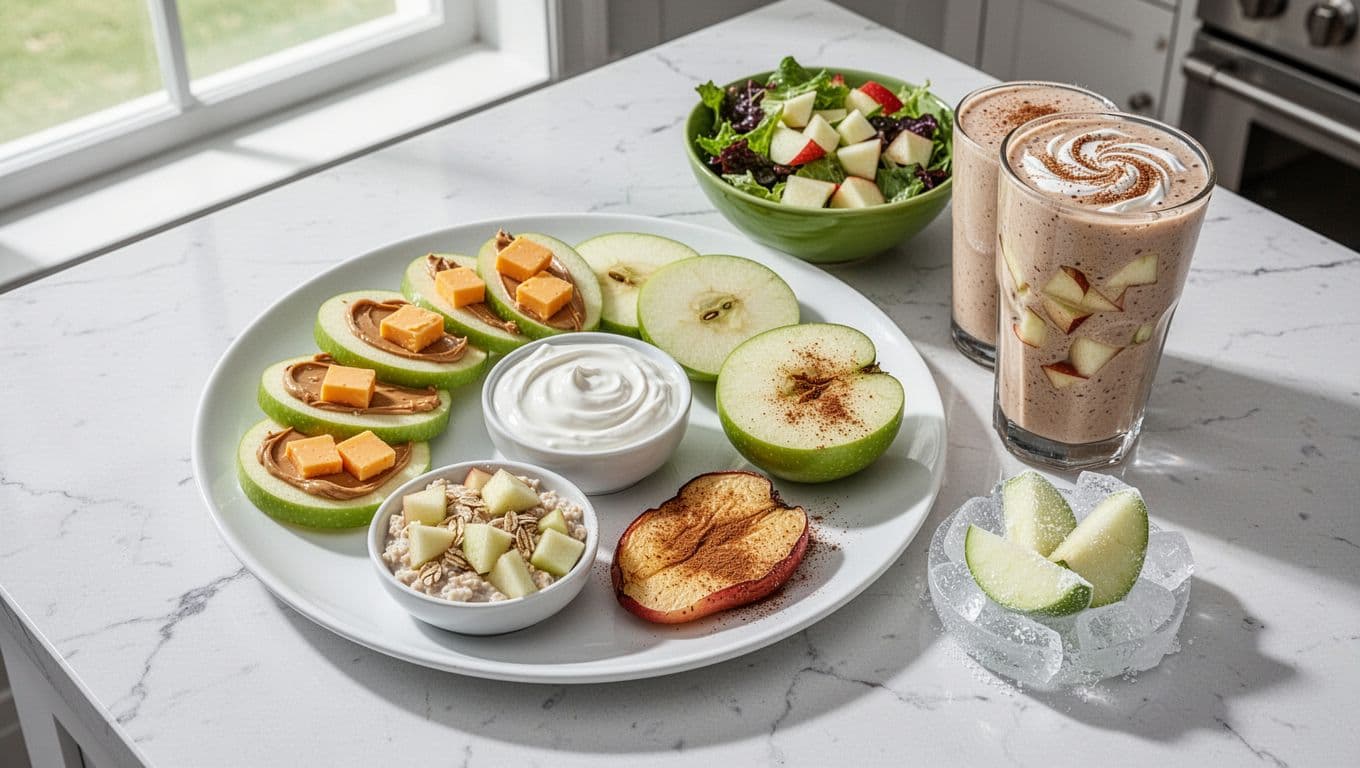
Granny Smith pairs well for snacking, better digestion, or weight control. Their fiber fills you up. Tartness curbs sweet cravings too. Try these quick ideas to hit your goals:
- Slices with peanut butter: Spread thick on crisp wedges. Adds protein for steady energy.
- Greek yogurt dip: Dunk slices in plain yogurt. Boosts gut health with probiotics.
- Cheddar cheese bites: Top with sharp cubes. Fat slows sugar release.
- Chopped into oats: Stir bits into overnight oats. Fiber teams with whole grains.
- Salad crunch: Toss chunks in greens. Keeps meals light yet satisfying.
- Baked with cinnamon: Core, sprinkle, and bake. Warm treat without much added sugar.
- Smoothie with protein: Blend chunks and powder. Fills you post-workout.
- Frozen slices as a cold treat: Freeze wedges plain. Chewy snack beats ice cream.
Pair any with nuts, cheese, or yogurt. These add satiety and blunt sugar spikes. Fiber already helps, but combos keep blood sugar even.
Raw vs. baked: does cooking change the nutrition?
You wonder if baking shifts Granny Smith apple nutrition facts. Raw keeps everything crisp. Heat softens fiber a bit. Pectin turns gel-like faster, which aids digestion still. Some vitamin C drops from heat; it’s sensitive. Yet core fiber, carbs, and plant compounds like quercetin hold up well. A baked apple delivers most benefits.
Added sugars swing nutrition more. Pies pack brown sugar or crust. Caramel dips double calories fast. Bake plain or with cinnamon instead. You retain low-cal perks
Raw wins for max vitamins. Baked suits warm days. Either way, skin on maximizes gains.
Conclusion
Granny Smith apples deliver solid nutrition in every crisp bite. One medium size, around 167 grams, packs 97 calories, 23 grams carbs, 4.7 grams fiber, and 17 grams sugars. Per 100 grams, you get 58 calories, 14 grams carbs, 2.8 grams fiber, and 10 grams sugars. Plus, 200 mg potassium supports muscles and heart health. Quercetin and other polyphenols in the green skin fight inflammation too.
Fiber stands out because it fills you up, aids digestion, and steadies blood sugar. Eat the skin always; it holds most benefits. So, pick portions that fit your day, like slices for snacks or a whole one midday.
Pair them smart for better results. Add peanut butter or cheese. These slow sugar release and keep energy even. In short, Granny Smith apple nutrition facts make them a smart daily choice.
Back to Fuel Energy for Nutrition
You may also find this Nutrition Geeks guide helpful: Unlocking the Amazing Gulkand Benefits for Your Health and Wellness.
You may also find this Nutrition Geeks guide helpful: Explore Herbalife Products and Prices: Your Guide to Wellness Options.
You may also find this Nutrition Geeks guide helpful: Exploring the World of Hbalife: Nutrition and Opportunities.
You may also find this Nutrition Geeks guide helpful: Discover Herbalife Costa Rica: Your Gateway to Wellness and Nutrition.
You may also find this Nutrition Geeks guide helpful: Discover the Herbalife Aloe Vera Juice Price: Your Guide to Flavors and Savings.
You may also find this Nutrition Geeks guide helpful: Mastering the 6 Hour Marathon Pace: Your Ultimate Training Guide.