Hormone Guides
Low energy that won’t budge, stubborn belly fat, poor sleep, low libido, irregular periods, and slow recovery can feel like a training problem, even when your plan looks solid. For runners and active people, those signs often show up when stress, fueling, and life load stop matching what your body can handle.
Hormones are chemical messengers that tell your body what to do, and when to do it. When they drift out of balance, you might notice it in your mood, appetite, performance, and how quickly you bounce back after hard sessions.
These hormone guides are here to educate, not diagnose, because the same symptoms can come from many causes (under-fueling, iron issues, sleep debt, medications, thyroid problems, and more). You’ll get a practical framework you can use right away, including the basics, common hormone patterns runners run into, how testing works, and how to use food and training levers to support better recovery.
You’ll also see where supplements and medications may fit, and where they don’t. For example, some people explore options like inositol for PCOS and fertility support when cycle issues and insulin signaling are part of the picture, but it’s never a one-size fix.
Safety matters most: if you’re pregnant or trying to conceive, have a current or past eating disorder, or you have severe symptoms (fainting, chest pain, rapid unexplained weight change, heavy bleeding, suicidal thoughts), don’t self-treat, get clinician support promptly.
The hormone basics you actually need (and what each one does in the body)
Hormones are chemical messengers. They move through your blood, deliver instructions, and help your body match energy use to the moment. Some are made in the brain (hypothalamus and pituitary), others in the thyroid, adrenals, pancreas, ovaries or testes, and even the gut.
Most hormone systems run on feedback loops, like a thermostat. When a signal gets too high or too low, your brain and glands adjust output to bring you back toward steady. That’s why timing matters. Cortisol should be higher in the morning, insulin rises after meals, and growth hormone pulses during deep sleep. Also, men and women share the same hormones, just in different patterns and ranges.
Metabolism and weight: insulin, thyroid hormones, and leptin
Think of insulin (from the pancreas) as your “fuel traffic controller.” After you eat, insulin helps move glucose out of the bloodstream and into muscle and liver, where it can be used or stored. When that system gets strained, you might feel energy crashes after meals, strong cravings an hour later, or irritability that lifts once you eat again. For runners, big spikes and dips often show up when meals are heavy on refined carbs but light on protein, fiber, and fat.
Thyroid hormones (made in the thyroid, regulated by the brain) set your baseline “idle speed,” or metabolic rate. When thyroid signaling runs low, everything can feel slower, including digestion and body temperature. Easy-to-miss signs include cold hands and feet, constipation, dry skin, and feeling puffy. Training can still feel hard even at paces that used to be comfortable.
Then there’s leptin, produced by fat tissue, which helps signal fullness and energy availability to the brain. If you chronically under-fuel, leptin can drop, and your body may act like food is scarce, even if you’re “trying to be disciplined.” That can drive constant hunger, preoccupation with food, and stubborn fatigue. On the other hand, some people experience weaker leptin signaling over time and don’t feel satisfied when they should.
A useful reminder from these hormone guides: weight changes are not always a willpower problem. Your body may be responding to stress, under-fueling, sleep loss, or blood sugar swings. If insulin signaling is part of your pattern, start with the basics of improve insulin sensitivity with diet before you assume you need more grit.
Stress, sleep, and recovery: cortisol, adrenaline, and growth hormone
Hard training is stress, and that’s not bad. You break down a little in order to rebuild stronger. The problem starts when life stress plus training stress keeps your nervous system stuck in “go mode.”
Adrenaline (and related stress chemicals) helps you sprint, focus, and respond fast. It’s useful before a workout or race. However, when you’re always keyed up, you may feel restless, jumpy, or unable to fully relax after runs.
Cortisol (from the adrenals, directed by the brain) helps mobilize energy, supports blood pressure, and helps you wake up. It follows a daily rhythm, usually higher in the morning and lower at night. A common runner pattern is feeling tired all day but wired at night, or waking around 3 a.m. with a busy mind. Some people also notice appetite changes, mood swings, or “second wind” energy late evening that delays sleep.
Growth hormone (released in pulses, mostly during deep sleep) supports tissue repair and adaptation from training. When sleep gets short or choppy, that repair signal drops. The result looks like: soreness that lingers, slower progress despite consistency, and more frequent minor injuries.
If you want one “supplement” for recovery, start with sleep. It’s the closest thing your body has to a repair switch.
Sex hormones for performance and health: estrogen, progesterone, and testosterone
Sex hormones are not only about reproduction. They shape bone strength, muscle repair, mood, and endurance capacity. Everyone produces estrogen, progesterone, and testosterone; the difference is the typical amounts and monthly patterns.
Estrogen supports bone health, influences how you use carbs and fat during exercise, and can affect joint laxity and mood. Progesterone tends to rise after ovulation and can increase resting body temperature and change breathing and fluid balance. For some runners, that means the same workout feels harder in the luteal phase, sleep can be lighter, and GI comfort can shift. Others feel no change at all.
For men, testosterone supports muscle protein synthesis, red blood cell production, and drive. Low testosterone can show up as low libido, lower motivation, depressed mood, and weaker lifts (even if you’re still running plenty). In women, testosterone is also important for strength and well-being, just at lower levels.
The practical takeaway is to watch patterns, not single days. If your training, appetite, sleep, and mood all swing together, hormones may be part of the story.
Inflammation and digestion hormones: GLP-1, ghrelin, and gut signals
Your gut is an endocrine organ too. It releases hormones that talk to your brain about hunger, fullness, and even nausea.
Ghrelin rises when you’re hungry and usually falls after you eat. GLP-1 increases after meals and helps with satiety and steadier blood sugar. In real life, these signals can get noisy. Ultra-processed foods tend to be easy to overeat because they’re calorie-dense, chew-fast, and often low in fiber and protein. As a result, fullness signals may arrive late, and hunger rebounds quickly.
Gut issues can also mimic “hormone problems.” Bloating, unpredictable stools, reflux, and cramping can overlap with fatigue and appetite swings. For runners, gut stress piles up from long runs, heat, race fueling, poor sleep, and high daily stress. If cravings and appetite feel out of control, it can help to address both sides: meal composition and digestive tolerance. For added ideas, see best supplements to curb sugar cravings as a starting point for appetite support basics.
Above all, keep it practical: eat enough, favor minimally processed staples most of the time, and use your training log to spot patterns your body is trying to tell you about.
Common hormone imbalance patterns people confuse, plus the real-life clues
When runners say “my hormones are off,” they’re usually describing a pattern, not a diagnosis. The tricky part is that many patterns overlap. Low energy can come from blood sugar swings, thyroid issues, under-fueling, perimenopause, poor sleep, low iron, or all of the above.
These hormone guides work best when you treat symptoms like clues from a training log. Look for timing, triggers, and what reliably helps. Then bring that info to a qualified clinician if the pattern persists.
Here’s a simple “table in plain English” to keep you grounded:
- Pattern: Blood sugar swings | What it can feel like: wired then wiped out | Common drivers: carb-heavy meals without protein or fiber | First steps: balanced breakfast, steady snacks, short walk after meals
- Pattern: Thyroid slowdown | What it can feel like: burnout that won’t lift | Common drivers: low calories, low iron, postpartum shifts, autoimmunity | First steps: proper labs, don’t self-treat, clinician plan
- Pattern: Low energy availability (RED-S) | What it can feel like: “I’m training hard but fading” | Common drivers: not eating enough for volume, fear of weight gain | First steps: increase intake, reduce load, sports RD and medical care
- Pattern: Perimenopause, menopause, and andropause | What it can feel like: sleep changes plus body composition shift | Common drivers: age-related hormone shifts, stress load | First steps: strength work, protein, recovery, discuss therapy options
Blood sugar swings and energy crashes (often blamed on “low metabolism”)
A common cycle starts at breakfast. You grab something fast, like a bagel, flavored yogurt, cereal, or a coffee drink. It tastes great, and you feel a quick lift. Then insulin rises to clear the glucose from your blood, and the “fuel meter” drops hard.
That crash often looks like:
- Hunger that feels urgent, not gentle
- Cravings for sweets or salty snacks
- Irritability or brain fog that fades after you eat again
For runners, this pattern shows up as “why did I bonk on an easy run?” You might feel shaky 20 to 30 minutes in, even at a conversational pace. Or you start packing gels for short workouts because you don’t trust your energy.
First steps that tend to work fast are simple, not extreme:
- Add protein at breakfast (eggs, Greek yogurt, tofu scramble, a protein smoothie).
- Pair carbs with fiber and fat (berries, oats, chia, nuts, avocado).
- Take a 10-minute walk after meals to blunt the spike.
- Fuel your runs on purpose, not out of panic. Eat a balanced meal 2 to 3 hours before, then adjust from there.
If you “need” a gel for a 30-minute easy run, it’s often a meal pattern problem, not a toughness problem.
Thyroid slowdown signals that can look like burnout
Thyroid issues get misread as overtraining all the time. You feel flat, so you cut calories, push caffeine, and grind more. Unfortunately, that can make the underlying problem louder.
Common clues include:
- Fatigue that doesn’t match training
- Cold intolerance (hands and feet feel icy)
- Dry skin and hair thinning
- Slower resting heart rate than your normal baseline
- Constipation and feeling “slowed down”
A few common drivers matter for runners. Low calorie intake can downshift thyroid signaling as your body tries to conserve energy. Low iron can also overlap with thyroid-like fatigue. In addition, postpartum changes and autoimmune thyroid disease are real and common, especially in women.
Don’t guess with thyroid support supplements and hope for the best. Get proper testing and medical guidance. That usually means discussing labs like TSH and free thyroid hormones, plus additional markers if symptoms or history point that way. If you want a supplement-focused overview to discuss with your clinician, see Thyrolin for thyroid support as a starting point for what products often include and what claims to question.
Low energy availability and missing periods in athletes (RED-S)
RED-S is what happens when you consistently don’t eat enough to cover training plus basic body needs. In plain terms, your body starts choosing survival over “extras” like reproduction, bone building, and full recovery. It is not about willpower. It’s about math and biology.
Key real-life clues often cluster together:
- Irregular or missing periods
- Stress fractures or frequent “bone weirdness”
- Getting sick often or slow wound healing
- Irritability and lower motivation
- Poor sleep (tired, but not restored)
- Plateaued or declining performance despite consistent work
This is one area where self-diagnosis goes wrong fast. You can have RED-S in a larger body or a smaller body. You can also have “normal” labs early on. If this sounds familiar, don’t wait it out. Bring in a sports dietitian and a clinician who understands athletes.
Perimenopause, menopause, and andropause, what changes and what helps
Perimenopause often starts in the late 30s to mid-40s, although timing varies. Menopause is defined as 12 months without a period, with the average age around 51 in the US. For men, testosterone can decline gradually over time, sometimes called andropause, although it doesn’t follow a single milestone the way menopause does.
Symptom clusters often include:
- Hot flashes or night sweats
- Sleep issues (waking at night, lighter sleep)
- Mood swings and anxiety spikes
- Belly fat shift even with similar habits
- Joint aches and slower bounce-back
Training usually improves when you adjust the dials. Many runners do best with more strength training, slightly less “junk mileage”, and more true easy days. In addition, protein becomes more important for preserving lean mass and supporting recovery. A practical target for many active adults is 25 to 35 grams of protein per meal, then adjust based on total daily needs and appetite.
Finally, don’t white-knuckle symptoms that are disrupting life. It’s reasonable to discuss options with your clinician, including hormone therapy when appropriate, plus screening for sleep apnea, iron issues, and thyroid problems that can mimic the same complaints.
How to use hormone guides to get useful testing (without wasting money)
Hormone guides are most helpful when you treat testing like a smart training block, not a fishing trip. Your symptoms, history, and lifestyle set the target, and labs help confirm what’s real. If you skip that context, it’s easy to buy random panels, retest too often, or chase noise.
Start by writing down your top 3 symptoms, when they started, and what makes them better or worse (sleep, training load, fueling, stress). Bring that plus your training log to a clinician. You’ll get better test choices, and you’ll be less likely to spend money on results that don’t change your plan.
Blood tests, saliva tests, and urine tests: when each makes sense
Most baseline evaluation starts with blood work, because it’s standardized and widely used in clinical care. It also pairs well with the basics runners often need first, like iron status, thyroid markers, blood sugar, and lipids.
Here’s a simple way to compare them:
| Test type | Pros | Cons | Best uses |
|---|---|---|---|
| Blood | Strong reference ranges, common in medical workups, broad marker access | Snapshot in time, some hormones vary by hour and cycle day | Baseline health screening, thyroid labs, iron markers, A1C, lipids, many sex hormone tests |
| Saliva | Noninvasive, can reflect free hormone patterns for some hormones | Collection quality varies, fewer standardized ranges for some markers | Multi-point cortisol patterns, certain research or symptom-specific situations |
| Urine | Can capture metabolites over time, useful for patterns | Can be harder to interpret, hydration affects results | Some hormone metabolite profiles, certain fertility or specialized endocrine evaluations |
A good rule: use the simplest test that answers the question. If you feel wiped out, cold, and your easy runs feel hard, blood work often tells you more than a fancy panel. If you’re exploring bone stress and recovery, don’t skip basics like iron and vitamin D (and if you want background on D3 pairing, see this guide to a best vitamin D3 and K2 supplement).
Timing rules that matter (cycle day, morning draws, fasted vs fed)
Timing turns “okay data” into data you can actually use. Hormones move like tides. If you test at random times, you can get a confusing result that looks like a problem.
Use these practical timing anchors:
- Cortisol: Often most useful in the morning, since it should peak after waking. If you’re doing a multi-point cortisol plan, follow the exact collection times.
- Thyroid labs (TSH, free T4): Often okay any time of day, but be consistent. If you test at 7 a.m. once, don’t retest at 4 p.m. and compare them like equals.
- Female sex hormones: Timing matters a lot. Estradiol, LH/FSH, and progesterone can mean different things depending on cycle phase.
- A1C: Can be done anytime, because it reflects a longer-term average.
- Fasting glucose and fasting insulin: Usually done fasted in the morning for cleaner interpretation.
Just as important, avoid testing during a “weird week.” Poor sleep, hard training, illness, and fasting can all skew results. A brutal long run the day before can raise stress hormones and inflammation markers. A tight calorie stretch can shift thyroid signals. Even dehydration can change lab concentrations.
If you want labs that guide decisions, test when you’re in a normal routine, not right after a crash week.
A starter lab list to discuss with your clinician
You don’t need an expensive hormone “bundle” to get started. For many runners, a practical baseline catches the most common issues that affect energy, recovery, and mood.
Discuss these with your clinician, and match them to your symptoms:
- CBC (complete blood count): Screens for anemia and infection patterns that can mimic “hormone fatigue.”
- CMP (comprehensive metabolic panel): Checks liver and kidney markers, electrolytes, and protein status.
- Fasting glucose: A quick look at fasting blood sugar.
- A1C: A longer-term view of blood sugar trends.
- Fasting insulin (context-dependent): Helpful when cravings, abdominal weight gain, or family history suggests insulin resistance.
- Lipid panel: Supports cardio risk screening and overall health.
- TSH and free T4: Common first-line thyroid labs, especially for fatigue, cold intolerance, constipation, or hair changes.
- Free T3 (sometimes): Useful in select cases, especially when symptoms persist and initial thyroid markers don’t explain them.
- Thyroid antibodies (if indicated): More relevant with family history, postpartum shifts, goiter, or persistent thyroid symptoms.
- Ferritin plus iron studies: Big for runners, since low iron can flatten performance and mood.
- Vitamin D: Common deficiency, tied to bone health and immune resilience.
- Vitamin B12: Especially relevant for plant-forward diets, GI issues, or unexplained fatigue.
- CRP (C-reactive protein): A general inflammation signal, best interpreted with context.
Then add sex hormones only when symptoms point there (cycle disruption, infertility concerns, low libido, hot flashes, acne or hair changes, unexplained performance drop):
- For women: Estradiol, LH/FSH (often early cycle), and progesterone timed to the mid-luteal phase (commonly about 7 days after ovulation, not just “day 21” for everyone).
- For men: Total testosterone, free testosterone, and SHBG to help interpret what’s available to tissues.
Avoid these common traps that waste money:
- Random mega-panels that don’t match your symptoms or training reality.
- Chasing tiny out-of-range numbers without symptoms, trends, or repeat confirmation.
- Testing in the wrong cycle phase and drawing big conclusions from the wrong day.
When symptoms are urgent, don’t wait on a guide
Hormone guides are for learning and planning. They are not a substitute for urgent care. If any of these show up, get medical help right away:
- Chest pain, pressure, or shortness of breath that feels new or severe
- Fainting or near-fainting, especially during or after exercise
- Rapid, unexplained weight loss
- Severe depression, suicidal thoughts, or feeling unsafe
- Heavy bleeding, bleeding between periods, or bleeding after menopause
- Pregnancy complications, severe abdominal pain, or concerning symptoms during pregnancy
Also reach out promptly if you have severe fatigue, sudden weight change, infertility concerns, or abnormal bleeding. In those cases, speed matters more than perfect timing, and a clinician can help you choose the right tests first.
Food, training, and daily habits that support healthy hormones (the big levers)
Runners often chase hormone balance through tests or supplements first. However, food, training, and daily habits offer the biggest levers. These steps steady insulin, cortisol, and sex hormones because they match your body’s needs after runs. Start small. Consistency beats perfection every time. Cut late-night training sessions; they spike cortisol when you need rest. Limit alcohol to one drink a few times weekly; it disrupts sleep and recovery. Time caffeine before noon so it fades by evening.
Build meals that steady blood sugar and hunger
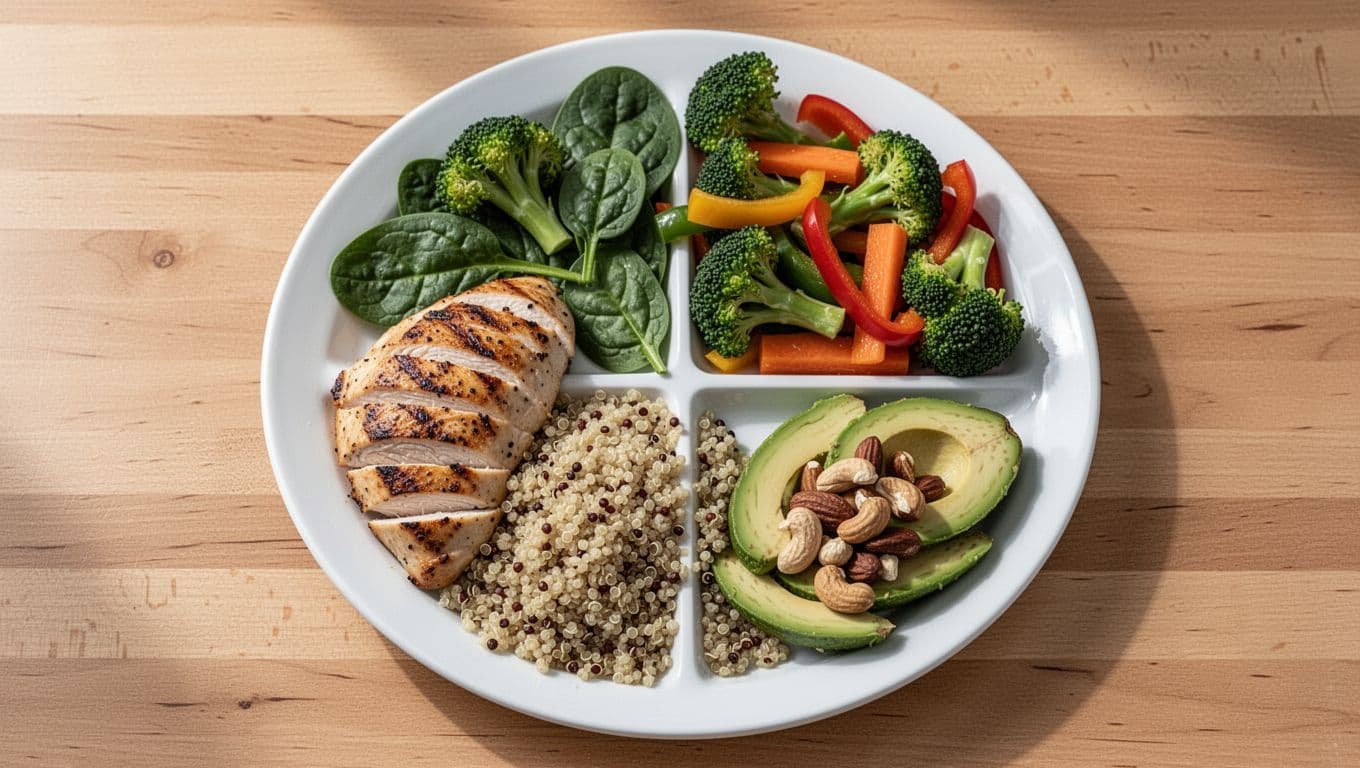
Steady meals prevent insulin spikes that drain energy mid-run. They also curb constant hunger tied to low leptin signals. Use a simple plate method: fill one quarter with protein, one quarter with high-fiber carbs, half with colorful plants, and add healthy fats.
This setup slows digestion. As a result, blood sugar stays even. For active runners, aim for 25 to 40 grams of protein per meal. That’s about a palm-sized portion, like four to six ounces of meat or fish. Adjust based on your size and hunger.
Try these examples:
- Breakfast: Two eggs scrambled with spinach and tomatoes (protein and plants), one slice whole-grain toast topped with avocado (carbs and fats), and a side of berries. Keeps you full until lunch.
- Post-run meal: Grilled chicken breast (protein), sweet potato (high-fiber carb), steamed broccoli and carrots (plants), drizzled with olive oil and a handful of almonds (fats). Refuels glycogen without crashes.
Snack the same way before longer runs. A banana with nut butter and yogurt works. Eat two to three hours prior. This fuels without gut issues.
Train hard, but recover like it’s part of the plan
Too much intensity raises cortisol all day. That pattern worsens sleep and stalls recovery. Balance keeps growth hormone pulsing during rest.
Build a weekly mix: three to four easy runs (conversational pace), one to two quality sessions (intervals or tempo), two strength sessions (squats, deadlifts, planks), and one to two rest or cross-train days (yoga, cycling). Strength builds twice weekly because it boosts testosterone and insulin sensitivity.
Schedule deload weeks every four to six. Cut volume by 30 to 50 percent. Your body adapts better then.
Watch these signs for more recovery: lingering soreness, poor sleep, mood dips, or stalled paces. Slow down immediately.
Runners improve speed and health with better fueling around workouts, as one study shows. Prioritize easy days. They let hormones reset.
Sleep and light habits that help your hormone rhythms
Cortisol peaks at dawn to wake you. Melatonin rises at night for repair. Messy light exposure flips that rhythm. Fix it with routines.
Wake at the same time daily. Get 10 to 15 minutes of outdoor light right after. Morning sun lowers evening cortisol. At night, dim lights two hours before bed. That signals melatonin release.
Limit screens one hour prior; blue light blocks melatonin. Keep your room cool (around 65 degrees Fahrenheit), dark, and quiet. Aim for seven to nine hours nightly.
Caffeine cutoff helps too. Stop by noon because its half-life lingers. These steps align your clock. Deep sleep then boosts growth hormone for muscle repair.
Track progress in your log. Better sleep shows in fresher legs on runs.
Stress, but make it manageable (breathing, downtime, and social support)
Stress adds up from runs, work, and life. It raises cortisol chronically. That crowds out progesterone and testosterone. Manage it daily.
Try these easy tools:
- 5-minute breathing: Inhale four counts, hold four, exhale six. Lowers heart rate fast because it activates calm nerves.
- Short walks: 10 minutes outdoors after tough days. Clears your head and steadies blood sugar.
- Journaling: Note three wins nightly. Builds positivity amid training grind.
- Therapy or coaching: Talk it out monthly. Gains perspective on overload.
- Say no: Skip extra sessions when tired. Protects recovery.
Remember, stress includes under-eating and skimped sleep. Fuel fully around runs. Connect with running friends weekly; support buffers hormones.
These habits in your hormone guides stack simply. Pick two to start. Track changes over two weeks. Energy and recovery improve as levers align.
Supplements and hormone therapies, what’s proven, what’s hype, and what to ask
These hormone guides show food, training, and sleep as your main tools. They fix most issues for runners. Supplements fill real gaps, but only after labs confirm a need. Hormone therapies come next, under doctor care. Skip “hormone boosters” that promise quick fixes. Many lack proof and hide contaminants. Third-party tests spot those risks. Always check drug interactions too.
Supplements that may help when you have a clear need
Basics come first because they often solve fatigue or slow recovery. Supplements shine for proven shortfalls. For example, vitamin D supports bone health and mood when levels test low, common in runners who train indoors. Omega-3s ease inflammation and joint aches; see signs of omega-3 deficiency symptoms like dry skin or brain fog. Magnesium glycinate aids sleep and muscle calm, especially after heavy weeks. Creatine boosts strength and focus; check this Jacked Factory creatine review for a clean option.
Iron fits only with lab proof, since excess harms. Iodine and selenium need caution; they support thyroid but overload risks toxicity. Ashwagandha may lower stress, yet pick tested forms like in this ashwagandha gummies vs capsules comparison. Berberine helps blood sugar, but watch gut side effects.
Pick third-party tested brands. Start low, track changes. They support, not replace, meals and rest.
Hormone therapy basics: thyroid meds, hormonal birth control, TRT, and menopause hormone therapy
Therapies treat clear diagnoses, not vague symptoms. Thyroid meds like levothyroxine replace low hormone output. They lift energy and speed when labs show issues. Dosing starts low; follow-ups tweak it because needs shift with training or weight.
Hormonal birth control steadies cycles and eases cramps for some runners. It affects estrogen and progesterone, so fertility goals matter most for women. Discuss plans to start a family first.
TRT raises low testosterone in men, aiding muscle and drive. Women use it rarely for similar benefits. Menopause hormone therapy balances estrogen and progesterone shifts, cutting hot flashes and sleep woes.
Side effects vary: weight gain, mood dips, or clots for some. Dosing and check-ins prevent that. Shared decisions with a clinician weigh your runs, age, and risks. For evidence, see studies on magnesium and vitamin D in athletes.
Smart questions to bring to an appointment
Prep sharp questions to guide talks. They keep focus on your runs and recovery.
Bring this checklist:
- What diagnosis fits my symptoms? Pinpoints the issue.
- Which labs back it up? Confirms with data.
- What else could cause this? Rules out mimics like low iron.
- What lifestyle steps first? Builds on food and sleep.
- What’s the expected timeline? Sets real goals.
- What’s the follow-up plan? Tracks progress.
- When do we stop or switch? Spots non-responders early.
These steps make hormone guides actionable. You leave with a clear path.
More Hormone Guides You May Be Interested In
Best menopause supplement for hot flashes
Best supplement for hormonal acne
Best supplement for pcos weight loss
Inositol supplement for pcos reviews
Best estrogen balance supplement
Best progesterone cream over the counter
Best thyroid support supplement
Best supplement for adrenal fatigue
Best prenatal vitamin with dha
Best postnatal vitamin for breastfeeding
Best supplement for low libido women
Best supplement for perimenopause anxiety
Maca root supplement for women reviews
Best iron supplement for pregnancy
Best fertility supplement for women over 35
Conclusion
Hormones shift with sleep, stress, food intake, training demands, and health factors. These hormone guides show you how to spot patterns and adjust. Most issues improve through steady actions, not quick fixes.
Start with this 7-day plan to build momentum:
- Day 1: Protein breakfast. Eat 25-30 grams first thing, like eggs with veggies. Note energy levels.
- Day 2: Easy run day. Keep pace conversational for 30-45 minutes. Add a post-run snack with carbs and protein.
- Day 3: Strength day. Do squats, planks, and rows for 20-30 minutes. Focus on form over load.
- Day 4: Sleep schedule. Aim for bed by 10 p.m., wake at 6 a.m. Get morning light for 10 minutes.
- Day 5: Recovery day. Walk or yoga only. Skip intensity; read your training log for patterns.
- Day 6: Stress tool. Practice 5-minute breathing: inhale four, hold four, exhale six. Do it twice.
- Day 7: Symptom tracking. Log mood, sleep, hunger, and run feel. Spot wins and tweaks.
Small steps like these steady insulin, cortisol, and recovery signals. For example, pair meals to curb blood sugar swings, as in best supplements to curb sugar cravings.
See real changes in two weeks. If symptoms persist, like fatigue or cycle issues, consult a clinician for tests. Steady habits fuel long-term runs and well-being. Your body adapts when you listen. Keep logging, stay consistent, run stronger.
Back to Best Time to Take Vitamins