Disclosure: This post may contain affiliate links, meaning if you decide to make a purchase through my links I may earn a commission at no additional cost to you. See my disclosure for more info.
Back to NutritionGeeks Fitness
Quinoa gets called a superfood for good reason. It’s one cup of cooked quinoa packs all nine essential amino acids, so it’s a complete protein. Plus, it delivers just 120 calories per 100-gram serving, with 4.4 grams of protein and 2.8 grams of fiber.
These quinoa nutrition facts matter because they help you build better meals. For example, if you’re on a plant-based diet, quinoa fills protein gaps without meat. It’s also naturally gluten-free, so it fits gluten-sensitive needs perfectly.
Explore more NutritionGeeks guides related to wellness, recovery, nutrition and active lifestyle support.
In addition, its low glycemic index keeps blood sugar steady. You avoid crashes and stay full longer. Meanwhile, minerals like magnesium and manganese support bones and muscles.
Quinoa’s popularity has soared as more people seek healthy swaps for rice or pasta. Studies show vegans love it for muscle support. However, many still wonder about exact calories, carbs, or vitamins.
More NutritionGeeks Wellness Guides
Explore more NutritionGeeks guides connected to wellness, recovery, hydration, energy, sleep and active lifestyle nutrition.
So, stick around. This post breaks down all the quinoa nutrition facts you need: protein, carbs, fats, and key nutrients per serving. You’ll learn how to use them for weight loss, energy, or balanced plates. After all, smart choices start with real numbers.
Quinoa Nutrition Facts at a Glance: Cooked vs. Dry Servings
You often see quinoa nutrition facts listed for cooked servings. That’s because we eat it boiled, not raw. Dry quinoa packs dense nutrients, but cooking adds water and triples the weight. As a result, 100 grams dry turns into about 300 grams cooked. This dilutes calories and macros per gram. Check the table below for a quick side-by-side on key stats per 100 grams.
| Nutrient | Cooked (per 100g) | Dry (per 100g) |
|---|---|---|
| Calories | 120 | 368 |
| Protein | 4.4g | 14g |
| Carbs | 21.3g | 64g |
| Fat | 1.9g | 6g |
| Fiber | 2.8g | 7g |
| Sugar | 0.9g | 0g |
| Water | 72% | 6% |
Cooked wins for everyday use. It matches a typical bowl size. Dry suits storage or recipes, but always weigh cooked for accuracy.
Calories and Macros Breakdown
Dry quinoa hits around 368 calories per 100 grams. Carbs fuel 70% of that energy. Protein adds 15%, and fat covers the rest. Cooked drops to 120 calories thanks to water. Yet macros stay balanced at 71% carbs, 15% protein, and 14% fat.
Think of it like rice. Dry rice seems heavy on carbs too. But quinoa’s protein shines brighter. You digest it easily because it’s a complete source with all amino acids. In addition, bodies break it down without strain. So, pair it with veggies for steady fuel.
Fiber and Sugar Content Explained
Cooked quinoa offers 2.8 grams of fiber per 100 grams. That’s about 5 grams in a cup. Fiber feeds your gut bacteria. As a result, you feel full and digestion improves.
Sugar stays low at 0.9 grams. No wild spikes here. Instead, you get even energy all day. Meanwhile, dry packs more fiber at 7 grams, but portions shrink post-cook. Choose cooked for real meals. It keeps blood sugar stable without the crash.
The Power of Quinoa’s Complete Protein and Amino Acids
Looking for how much protein in quinoa? Quinoa shines in quinoa nutrition facts because it counts as a complete protein. That means it supplies all nine essential amino acids your body can’t produce on its own. Most plant foods fall short, so you often mix beans with rice to fill gaps. Quinoa skips that hassle. You get everything in one bite.
This setup helps vegetarians and athletes alike. For example, it supports muscle repair after workouts. In addition, the protein keeps you full longer, so snacks stay at bay. Picture it as a full toolbox for your body, ready for any repair job. Rice or wheat? They leave key tools behind.
Bodies absorb quinoa’s protein well, at about 73%. That’s better than rice at 56% or wheat at 49%. As a result, you build strength faster on plant-based meals. Studies back this edge, showing quinoa’s balanced aminos beat other grains for daily needs.
Why Lysine Makes Quinoa Special
Lysine powers protein synthesis in your body. It builds carnitine to burn fat for energy. Plus, it forms collagen for skin and bones. You also absorb calcium better with it. Without enough, growth slows and tissues weaken.
Quinoa packs high lysine levels, around 766mg per 100 grams uncooked. That’s twice what cereal grains offer. Rice stays very low. Wheat hits just 404mg. So, quinoa stands tall against them.
Check this quick comparison per 100 grams cooked:
| Nutrient | Quinoa | Rice (white) | Wheat |
|---|---|---|---|
| Lysine | High | Very low | Low |
| Protein Quality | Complete | Incomplete | Incomplete |
| Digestibility | 73% | 56% | 49% |
Grains like rice need pairs with lysine-rich foods, like legumes. Quinoa doesn’t. Therefore, it’s perfect solo for quick meals. Athletes love it for recovery. Vegetarians rely on it to match meat’s punch. In short, lysine gives quinoa real staying power.
Vitamins and Minerals in Every Bite of Quinoa
Quinoa packs a nutrient punch that boosts your quinoa nutrition facts beyond basics like protein and carbs. One cup cooked (about 185 grams) delivers key vitamins and minerals. These support energy, bones, and immunity. For example, magnesium aids over 300 body reactions. Iron keeps muscles strong. You get solid daily value percentages too.
Check this breakdown per cup cooked. Data comes from USDA sources. It shows how quinoa stacks up against RDAs for adults.
| Nutrient | Amount per Cup | % Daily Value (approx.) |
|---|---|---|
| Magnesium | 118 mg | 28% (RDA 310-420 mg) |
| Iron | 2.8 mg | 15% (RDA 8-18 mg) |
| Manganese | 1.17 mg | 51% (RDA 1.8-2.3 mg) |
| Folate (B9) | 78 mcg | 20% (RDA 400 mcg) |
| Phosphorus | 152 mg | 22% (RDA 700 mg) |
| Copper | 0.19 mg | 21% (RDA 0.9 mg) |
| Zinc | 1.1 mg | 10% (RDA 8-11 mg) |
| Potassium | 318 mg | 7% (RDA 4700 mg) |
| Thiamine (B1) | 0.11 mg | 9% (RDA 1.1-1.2 mg) |
| Riboflavin (B2) | 0.16 mg | 12% (RDA 1.1-1.3 mg) |
| Vitamin B6 | 0.12 mg | 9% (RDA 1.3-1.7 mg) |
| Vitamin E | Trace | <5% (RDA 15 mg) |
These numbers add up fast in meals. Meanwhile, quinoa stays naturally gluten-free. It suits celiac diets or gluten avoidance. Swap it for wheat without gut woes or nutrient drops.
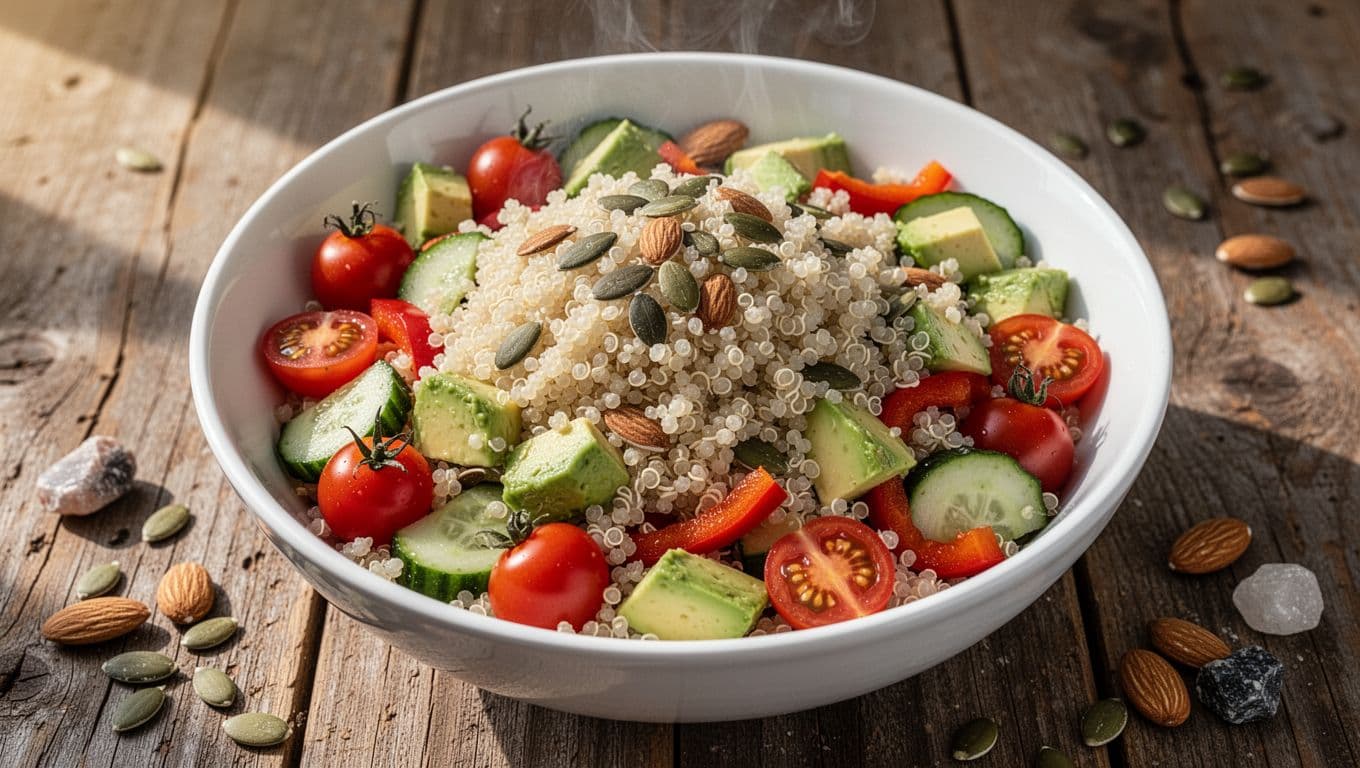
Start your day with it, and you fuel reactions for energy. Add spinach for extra iron synergy. Bodies use these minerals well because quinoa digests easily.
Antioxidants and Their Protective Role
Quinoa beats many grains on antioxidants. Compounds like quercetin and kaempferol fight cell damage from stress or pollution. As a result, you gain protection that rice or barley often lacks.
Vitamin E adds a bit more defense, though levels stay low. Still, it teams up with others for skin health and immunity. In contrast, wheat offers less overall.
This mix shines in gluten-free diets. You avoid inflammation risks while getting these perks. Rinse quinoa first to cut bitter saponins. Then cook it into salads or bowls.
Studies show quinoa’s antioxidants reduce inflammation better than corn. Therefore, it supports heart health over time. Pair it with berries for even more power. Your cells thank you with every bite.
How Quinoa Stacks Up Against Rice and Other Grains
You know rice dominates side dishes, but quinoa changes that game in quinoa nutrition facts. It packs more protein, fiber, and minerals than white rice. Calories stay close, so you upgrade nutrition without extra energy intake. Brown rice improves on white, yet quinoa pulls ahead overall. Oats and barley compete well too. Check this table for a clear view per 100 grams cooked.
| Grain | Calories | Protein (g) | Carbs (g) | Fiber (g) | Magnesium (mg) | Iron (mg) |
|---|---|---|---|---|---|---|
| Quinoa | 142 | 5.1 | 25 | 3.2 | 75 | 2.8 |
| White Rice | 130 | 2.7 | 28 | 0.4 | 12 | 0.2 |
| Brown Rice | 140 | 3.2 | 29 | 2.3 | 54 | 0.6 |
| Oats | 98 | 3.8 | 17 | 2.5 | 40 | 2.4 |
| Barley | 123 | 2.6 | 28 | 3.8 | 21 | 1.3 |
Quinoa leads in protein completeness and magnesium. In addition, its fiber beats white rice by far. So, you stay full longer. Switch to it for better gut health and steady energy. Meanwhile, minerals like iron support muscles without calorie jumps.
Glycemic Index and Blood Sugar Benefits
Quinoa’s fiber-to-carb ratio keeps its glycemic index low at 53. White rice hits 89, so it spikes blood sugar fast. Brown rice matches quinoa around 50. Oats and barley stay low too, at 50-55 and 28-35.
This low score means steady energy release. Your body digests quinoa slowly because fiber slows sugar absorption. As a result, you avoid crashes after meals. Rice often leaves you hungry soon after.
In short, choose quinoa for diabetes management or workouts. It fuels you even all day. Pair it with veggies, and benefits grow. Bodies handle it well, so energy lasts.
Health Wins from Quinoa’s Nutrient Profile
Quinoa’s nutrition facts reveal a powerhouse of benefits. Fiber, iron, manganese, magnesium, and antioxidants team up for real results. You feel them in daily life, from steady energy to strong muscles. These nutrients link straight to the calories, protein, and minerals we covered earlier.
Fiber Fuels Smooth Digestion
That 2.8 grams of fiber per 100 grams cooked keeps things moving. It prevents constipation and lowers cholesterol. Plus, it feeds gut bacteria for better microbiota balance.
Picture a busy morning. You eat a quinoa bowl and skip the afternoon bloat. Fiber also curbs hunger, so you control weight easier. In short, it supports steady digestion all day.
Iron and Manganese Strengthen Muscles and Tissues
Iron at 2.8 mg per cup carries oxygen to muscles. Manganese adds 1.17 mg to aid tissue growth and metabolism. Together, they build strength without fatigue.
After a workout, add quinoa to recover faster. Runners notice less soreness because these minerals support repair. As a result, active bodies thrive on this combo.
Magnesium Powers Over 300 Body Reactions
Magnesium hits 118 mg per cup, fueling muscle moves, nerve signals, and energy. It fights high blood pressure and keeps diabetes at bay.
You wake up energized because it sparks those reactions. Desk workers avoid cramps with a quinoa lunch. Meanwhile, it calms migraines before they start.
Antioxidants Protect Gluten-Free Diets
Quercitin and kaempferol cut inflammation and cell damage. Recent data shows they boost good cholesterol and ease oxidative stress.
Gluten-free eaters swap grains without losing perks. A quinoa salad fights heart risks better than rice. Therefore, your meals guard health naturally.
Ready to take your nutrition and health to the next level? Check out these super food guides.
Conclusion
Quinoa stands out in quinoa nutrition facts with 120 calories, 4.4 grams of protein, and 2.8 grams of fiber per 100 grams cooked. It delivers complete protein with all essential amino acids, plus magnesium for energy, iron for muscles, and manganese for metabolism. In addition, its low glycemic index of 53 keeps blood sugar steady. Antioxidants like quercetin protect cells, and it beats rice in protein quality and minerals.
These perks make quinoa a smart swap for rice or pasta. You stay full longer, digest better, and build strength without gluten worries. For example, mix cooked quinoa with cherry tomatoes, avocado, greens, and a lemon dressing for a quick power salad. It takes 10 minutes and fuels your day.
Therefore, add quinoa to your plates today. Your body gets balanced nutrition that supports workouts, weight goals, or plant.
Back to Fuel Energy for Nutrition
You may also find this Nutrition Geeks guide helpful: Fitness and Nutrition Program for Beginners.
You may also find this Nutrition Geeks guide helpful: Understanding the Herbalife Shake Price in India: A Comprehensive Guide.
You may also find this Nutrition Geeks guide helpful: Horbilife: Your Guide to Nutrition and Wellness.
You may also find this Nutrition Geeks guide helpful: Mastering Eggs Benedict with Creamy Hollandaise Sauce: A Step-by-Step Guide.
You may also find this Nutrition Geeks guide helpful: Unlock Your Vitality: The Power of Herbal Life Energy Tea.