Disclosure: This post may contain affiliate links, meaning if you decide to make a purchase through my links I may earn a commission at no additional cost to you. See my disclosure for more info.
Bloating after meals, bathroom trips that feel random, a stress stomach before a big meeting, or a travel gut that goes off the rails, plenty of men end up searching for answers. The problem is that the supplement aisle is packed with “probiotic” labels that don’t tell you what matters.
Supplement note: This guide is for educational purposes only and is not medical advice. Always speak with your doctor before using supplements, especially if you are pregnant, nursing, taking medication, or managing a medical condition.
You can find additional resources connected to Best Probiotic For Mens Gut Health in our gut health information.
A probiotic is live helpful bacteria (and sometimes yeast) that can support your gut when you take the right strain in a steady way. It can help with things like gas, mild constipation or diarrhea, and overall regularity. Still, it won’t “reset” your whole body overnight, and it won’t fix a poor diet, heavy drinking, or a medical issue that needs treatment.
Explore related digestion, gut health and daily wellness guides designed for active lifestyles.
Looking for the best male probiotics for overall health? So what’s the best probiotic for men’s gut health? For many guys, a men-focused multi-strain option like Garden of Life Raw Probiotics Men is a strong starting point, especially if you want broad digestive support with a formula designed for men. On the other hand, some people do better with a simpler pick for one main goal (for example, bloating support).
Most people who respond notice changes in about 2 to 8 weeks, and results vary a lot based on strain choice and daily consistency. In this guide, you’ll learn how to pick a product that matches your symptoms, which strains tend to matter most, what safety and side effect signs to watch for, and a short list of solid options, including Garden of Life Raw Probiotics Men plus alternatives like Ritual Synbiotic+, MegaFood MegaFlora, and Align Extra Strength.
More NutritionGeeks Wellness Guides
Explore more NutritionGeeks guides connected to wellness, recovery, hydration, energy, sleep and active lifestyle nutrition.
What probiotics can do for men, and what they cannot
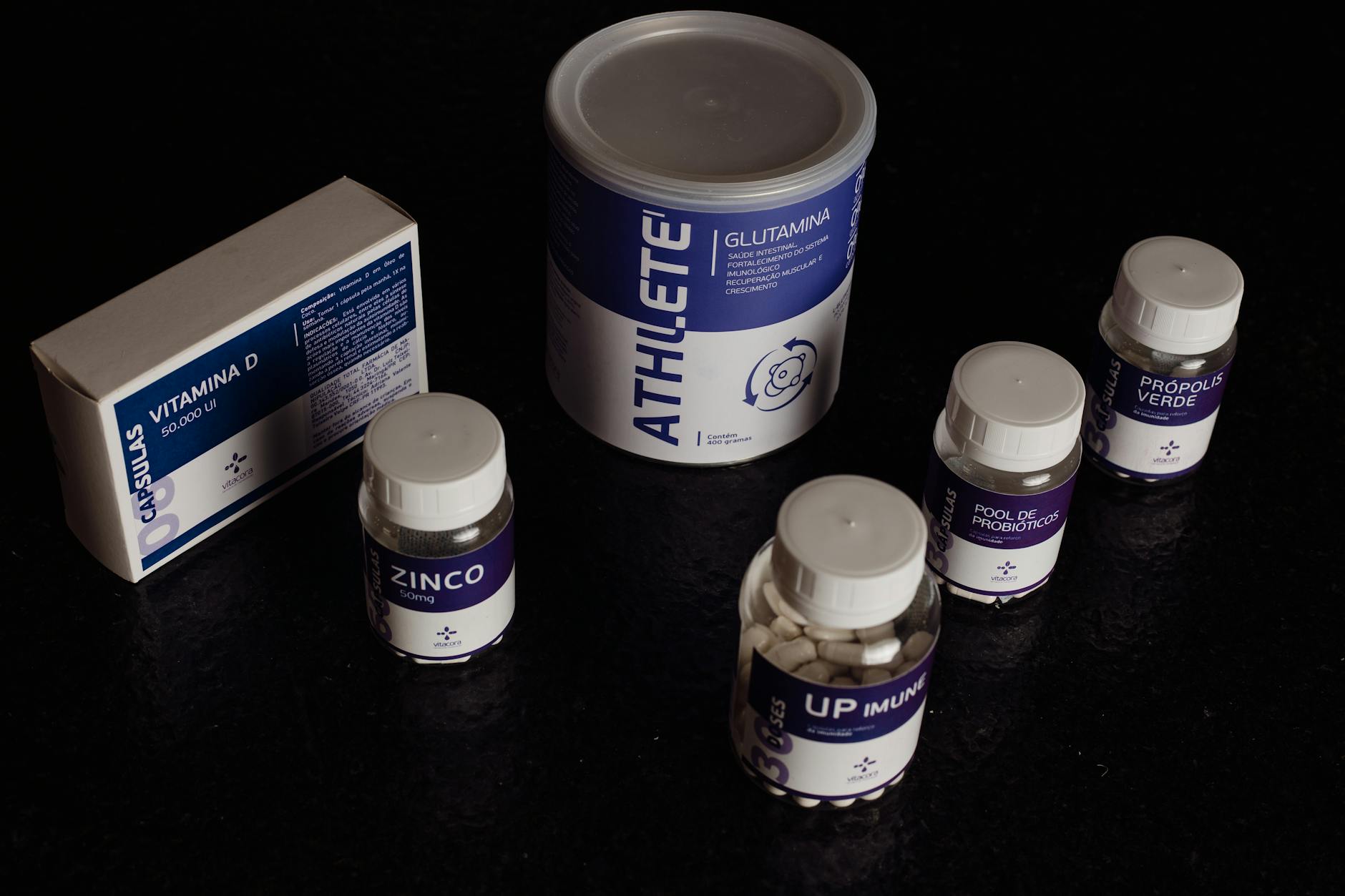 Photo by Guto Macedo
Probiotics can be a solid tool for day-to-day digestion, especially if you deal with gas, irregular stools, or a “touchy” stomach. Still, they’re not a body reset. Think of them more like adding a few helpful coworkers back into a busy office, not firing the whole staff and hiring a new team overnight.
Also, results depend on the specific strains and the dose used in studies, plus how consistently you take them. More CFUs doesn’t automatically mean better. The best probiotic for men’s gut health is usually the one that matches your main issue and fits your routine, so you actually take it daily.
Common gut wins men report (bloating, regularity, and less ‘off’ stomach days)
Most men who get value from probiotics aren’t chasing perfection. They just want fewer days where their stomach feels “off.” In real life, the most common changes look like:
- Less gas and bloating after typical meals, especially when your diet is inconsistent.
- More predictable bathroom trips, including less mild constipation or looser stools.
- Better comfort with certain foods (for example, a big dinner out doesn’t always punish you the next day).
- Steadier digestion during stress or travel, when sleep and meal timing get weird.
A simple timeline helps set expectations. You’re not “failing” if you don’t feel something on day three.
| Timeframe | What you might notice | What’s normal |
|---|---|---|
| Week 1 to 2 | Small changes in gas, stool texture, or frequency | Mild bloating or extra gurgling can happen as your gut adjusts |
| Week 3 to 8 | Clearer benefits like less bloating and more regular stools | If nothing changes by week 8, you may need different strains or a different approach |
If a probiotic helps, you’ll usually notice comfort and regularity, not a dramatic transformation.
What probiotics cannot do: erase the effects of heavy drinking, low fiber, or constant late-night eating. They also won’t fix ongoing blood in stool, severe pain, or unexplained weight loss. Those need medical care.
The gut link to immune health, stress, and energy, without overhyping it
A big chunk of your immune system lives in and around your gut. That means your gut lining is like a bouncer at the door, it helps decide what gets through and what doesn’t. When your gut barrier and microbiome are in better shape, probiotics may help support a more balanced immune response.
Stress matters here too. Your gut and brain are in constant contact (often called the gut-brain axis). When you’re stressed, digestion can speed up, slow down, or just feel uncomfortable. On the flip side, when your gut is irritated, you might feel more run-down or moody. For some men, calming digestion helps them feel a bit more even.
Still, keep expectations grounded:
- Probiotics may support immune health, but they won’t stop you from ever getting sick.
- They may help with stress-related gut symptoms, but they aren’t a stress cure.
- They might help energy indirectly if poor digestion was dragging you down, but they’re not a stimulant.
Men-specific claims you will see on labels (testosterone, sperm, prostate)
Men’s probiotic labels love big promises. The truth is more mixed. There are interesting early signals in a few areas, yet most benefits aren’t consistent enough to bet on.
Testosterone: You’ll often see Lactobacillus reuteri mentioned. It has promising data in animal studies, but human evidence is limited. Treat it as a “maybe,” not a guarantee.
Sperm and fertility: A small body of human research suggests certain multi-strain formulas (often featuring Lactobacillus and Bifidobacterium species) may improve sperm markers in some infertile men after consistent use. That’s encouraging, but it’s not the same as proven fertility treatment.
Prostate or urinary support: Some blends are marketed for prostate comfort or urinary tract support. Outcomes vary a lot, and strong, repeatable results in men are still lacking.
The practical takeaway: buy a probiotic for digestive goals first (bloating, stool regularity, travel gut). If you get a men-specific “bonus” benefit, great. Just don’t make testosterone or prostate claims the main reason you choose a product.
How to pick a probiotic that actually works for your gut
Buying a probiotic shouldn’t feel like guessing. The best probiotic for men’s gut health is usually the one that matches your main symptom (bloating, irregular stools, or a “fragile” stomach), and clearly tells you what’s inside.
If you remember one rule, make it this: judge probiotics like you’d judge coffee beans. You want the exact variety and batch info, not “premium blend” in big letters. That means looking for strain names, realistic CFUs, and quality checks that tell you the bacteria can survive the trip to your gut.
Start with strains, not the hype on the front label
The front label is marketing. The strain list is the truth.
Look for full strain names that include genus, species, and an ID code. Here’s the format you want to see:
- Lactobacillus rhamnosus GG (often shortened to LGG)
- Bifidobacterium animalis ssp. lactis BB-12
That last part (GG, BB-12) is not fluff. It’s the strain identifier. Without it, you can’t tie a product to clinical studies, and you can’t know what you’re actually buying.
A few strains with strong track records for general gut support include:
- LGG: Often used for everyday gut comfort, including gas and loose stools, and commonly studied around antibiotic-associated diarrhea.
- BB-12: Well-studied for digestion and immune support, and frequently paired with other strains for regularity.
On the other hand, vague labels like “proprietary blend” or “Lactobacillus + Bifidobacterium complex” make it hard to predict results. Those products might still work, but you’re flying blind because different strains from the same species can act differently.
If the label doesn’t list full strain IDs, treat it like a mystery ingredient meal. You might feel fine, but you can’t choose it on purpose.
Practical matching tip: if your main issue is broad, day-to-day digestion, a simple LGG and BB-12 combo is a solid baseline to try. If your issue is very specific, look for strains that were studied for that problem, not a long list that “covers everything.”
How many CFUs do you need, and when more is not better
CFUs (colony-forming units) are the “how many” part, but they’re not the whole story. For most adults, a daily range of 10 to 50 billion CFUs is a practical starting point for general gut support. Some people do fine with less, especially if the strains are well-studied and the capsule protects them.
High CFU products can be useful for some goals, but more isn’t automatically better. In fact, mega doses can backfire if you’re sensitive, because they may cause extra gas or cramping at first. The goal is tolerable consistency, not the biggest number on the shelf.
Single-strain vs. multi-strain also depends on your goal:
- Single-strain makes sense when you want a focused, researched approach and easier troubleshooting (you’ll know what helped or didn’t).
- Multi-strain can be a good fit if your symptoms are mixed (bloating plus irregularity), or you want broad support.
Here’s a simple start low, go slow plan that works for many men:
- Days 1 to 7: Take a lower dose (or half dose if the label allows), ideally with food.
- Week 2: Move to the full suggested serving if you feel okay.
- Weeks 3 to 8: Stay consistent and track one or two signals (bloating after dinner, stool frequency, urgency).
- After week 8: If nothing changes, switch strains, not just CFU size.
If you react strongly (pain, severe diarrhea, or symptoms that feel “wrong”), stop and talk with a clinician. Mild gas early on is common, but you shouldn’t feel wrecked.
Prebiotics, synbiotics, and postbiotics, which should men choose
These terms sound like buzzwords, but the basics are simple:
- Prebiotics are fibers that feed helpful gut bacteria.
- Synbiotics combine probiotics plus prebiotics in one product.
- Postbiotics are beneficial compounds made by bacteria (or parts of bacteria) that can support gut function without needing live organisms to colonize.
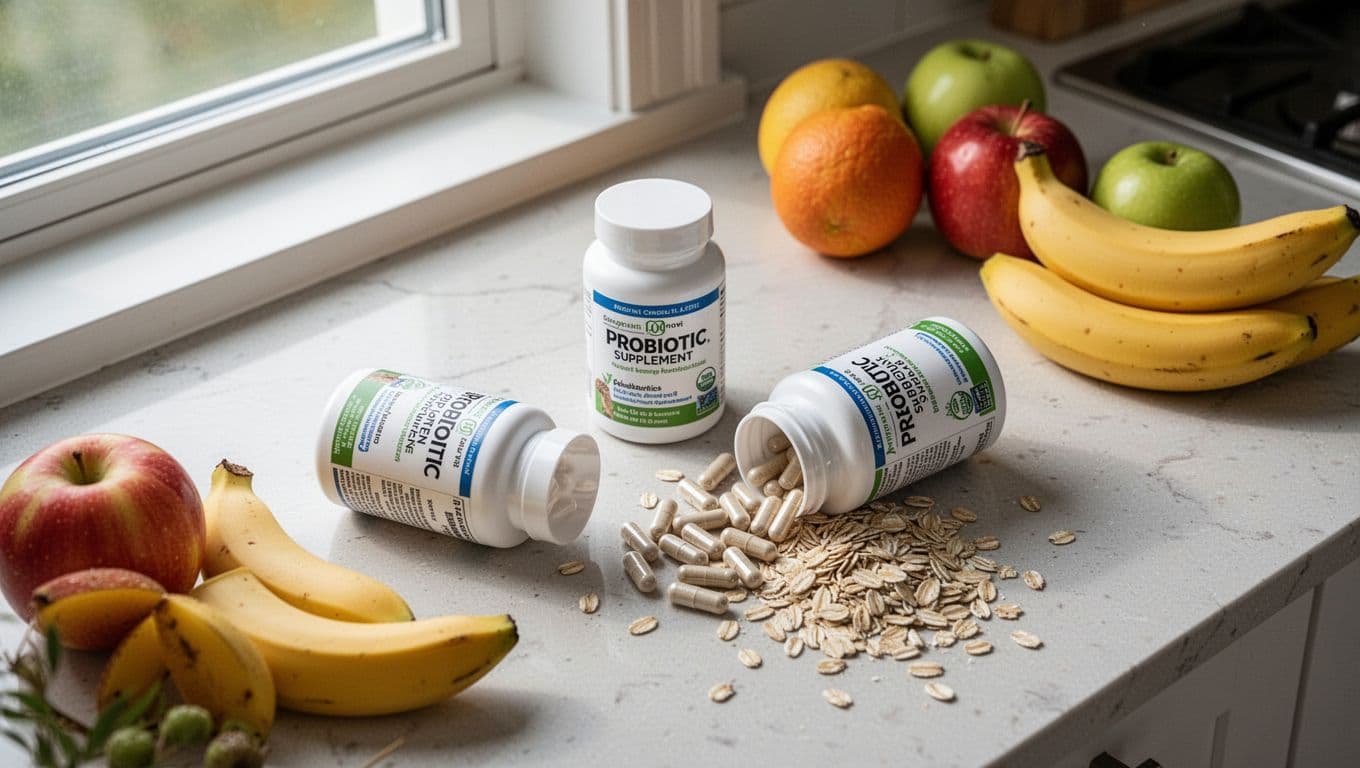
For many men, a synbiotic is the most practical “one-and-done” option because it includes the bugs and their food. As an example, some synbiotic formulas pair prebiotics with researched strains like LGG and BB-12, aiming to improve survival and activity in the gut.
Still, there’s a tradeoff. Some prebiotics can increase gas at first, especially if you have IBS-like symptoms or you’re not used to much fiber. If you know your gut is touchy, you can:
- Start with a probiotic-only product first, then add prebiotics later.
- Choose a synbiotic but begin with a smaller serving for a week or two.
- Increase prebiotic foods slowly (oats, bananas, beans, onions) instead of jumping all at once.
Postbiotics can be a nice option if you don’t tolerate live probiotics well, or if you want a “gentler” approach. They are also useful when storage and survivability are a concern.
Quality checks that matter: survivability, storage, and third-party testing
Even the best strains won’t help if they don’t make it through stomach acid. That’s why delivery and quality details matter almost as much as strain selection.
First, look for signs of survivability, such as enteric coating or delayed-release capsules. These are designed to protect probiotics until they reach the intestines. Next, pay attention to storage instructions. “Shelf-stable” isn’t automatically better than refrigerated, but it can be more realistic if you travel or forget the fridge.
Then check the CFU wording. The best labels state “CFUs at expiration”, not “at time of manufacture.” A product can lose potency over time, so the end-of-shelf-life number is what you’re counting on.
Use this quick quality checklist before you buy:
- Clear strain list with full IDs (example: L. rhamnosus GG).
- Clear CFU count at expiration, not only at manufacturing.
- Reputable brand with easy-to-find contact info and sourcing details.
- Lot testing or third-party testing for potency and contaminants.
- Transparent allergen info (dairy, soy, gluten, and capsule ingredients).
If a label hides the basics, don’t reward it. Your gut doesn’t care about a flashy name, it cares about what survives and what’s been studied.
Best probiotic for men’s gut health: top picks for 2026 and who each one is for
The best probiotic for men’s gut health isn’t the one with the biggest CFU number. It’s the one you can take consistently, that uses strains and a dose that fit your body and your main complaint (bloating, irregular stools, travel gut, or just “I want daily support”).
Below are 2026 picks that stand out for different reasons. Think of this like choosing shoes, not a trophy. Running shoes can be amazing, but not if you need work boots.
Best men’s formula overall: Garden of Life Raw Probiotics Men
Garden of Life Raw Probiotics Men gets recommended a lot because it’s built and marketed as a men-targeted formula, not just a generic probiotic in a dark bottle. It’s also high-potency, commonly listed as 31 strains and 85 billion CFUs per capsule, which appeals to guys who want broad coverage in one daily product.
The bigger draw is the “wide net” approach. Along with digestion support, it’s often positioned for broader men’s wellness areas, including immune support and prostate positioning. Marketing is marketing, but if you want one bottle that tries to cover multiple bases, this is the type of formula that fits that mindset.
This pick tends to make sense if you’re in one of these camps:
- You want daily gut support and don’t want to overthink strain research.
- You deal with frequent bloating and want a stronger, broad blend to try.
- You prefer a product that feels made for men, even if gut bacteria aren’t “male” or “female.”
Still, high potency has tradeoffs. If your gut is very sensitive, jumping straight into a very high CFU, multi-strain product can feel like turning on every light switch at once. Some men get extra gas or cramping at first, especially if they already have IBS-like symptoms.
A practical way to approach it: start with food, take it earlier in the day, and give it a couple of weeks before judging it. Also, price can run higher than simpler probiotics, so it’s best for people who will actually stick with it.
High CFU blends can help, but if they make you miserable, they’re not “stronger,” they’re just the wrong fit.
Best simple daily probiotic if you want a moderate dose: MegaFood MegaFlora
If Garden of Life feels like a “full toolkit,” MegaFood MegaFlora is closer to a reliable hammer. It’s commonly listed around a moderate daily dose (about 20 billion CFUs), which can be a sweet spot for men who want support without going ultra-high potency.
MegaFlora works well when your goal is steady, basic digestion support, not a men-specific blend or a long list of special features. It fits a straightforward routine: take it daily, keep your meals more consistent, and let the results build over time.
It’s a strong match for men who:
- Want a simple daily probiotic and a moderate dose.
- Don’t need “men’s” branding or extra positioning.
- Prefer a formula that’s less likely to feel intense on day one.
That said, no probiotic works if it stays in the cabinet. MegaFlora is the kind of supplement that rewards consistency. In addition, your diet still drives a lot of the outcome. If you take a probiotic but live on low-fiber meals, heavy alcohol, and irregular sleep, results usually stay modest.
A good way to use it is to pair it with one small habit you can keep. For example, add a daily fiber food (oats, chia, beans, or berries). That “food plus probiotic” combo often beats chasing a bigger CFU number.
Best targeted gut support pick: Ritual Synbiotic+ (LGG plus BB-12)
Ritual Synbiotic+ appeals to a different kind of buyer: someone who wants fewer, well-known strains instead of a massive blend. Its calling card is the strain choice, commonly featuring LGG (Lactobacillus rhamnosus GG) and BB-12 (Bifidobacterium animalis ssp. lactis BB-12), two of the most widely studied strains used for gut support.
Instead of trying to cover everything with dozens of strains, this approach is more like choosing a small team of specialists. For men who hate guesswork, that can feel more trustworthy. It’s also commonly positioned around survivability, with a delayed-release style capsule designed to help the strains make it through stomach acid.
Ritual Synbiotic+ is often a great fit if you:
- Prefer a targeted formula with recognizable, studied strain IDs.
- Want gut support but don’t want a “kitchen sink” blend.
- Care about delivery features that focus on getting bacteria to the gut.
One caution: “Synbiotic” means there’s usually a prebiotic component included. Prebiotics can be helpful, but they can also cause extra gas in some people at the start, especially if you’re sensitive to certain fibers. If your gut is easily irritated, monitor the first couple of weeks closely and consider easing in.
In short, this is a smart pick when you want a clean, focused strategy instead of a high-CFU, many-strain approach.
Other strong contenders if your needs are specific (active lifestyle, broad blend, or budget)
 Photo by Alicia Harper
Some probiotics are “worth a look” because they fit a narrow goal well, not because they’re universal winners. If you already know what matters to you (broad strain variety, budget, urinary positioning, or training support), these may fit better than the headline picks.
Hyperbiotics PRO-15 or Nature’s Bounty Probiotic 10 (broad multi-strain options): Both are popular if you want a multi-strain blend without paying for a men-specific label. They can make sense when your symptoms are mixed and you want general coverage. The tradeoff is that broad blends can be harder to troubleshoot. If you feel worse, you won’t know which strain or dose pushed you over the edge.
NOW Probiotic-10 (urinary or prostate positioning): NOW’s Probiotic-10 gets attention from men who like formulas positioned beyond digestion, including urinary or prostate angles. Keep your expectations grounded. Strong evidence still starts with gut comfort and regularity. Still, if you want a multi-strain product from a widely available brand, it can be a reasonable option to compare.
Legion Biome (active men positioning): Hard training can stir up gut issues, especially if you use high-protein diets, pre-workouts, or frequent shakes. Legion Biome is commonly positioned for active men who want digestion support that fits a workout lifestyle. If your gut gets weird during heavy training weeks, a fitness-leaning option may feel more “you,” which helps consistency.
Vitabright Advanced Bio-Cultures (gut-focused alternative seen in testing roundups): This is another gut-focused option that shows up in product roundups, especially for people who want a clear, supplement-style probiotic without a lot of lifestyle marketing. If you’re comparing labels and want a different brand to cross-check on strains, CFUs, and storage, it’s a reasonable candidate.
Here’s the quick, comparison-style takeaway in plain English: Garden of Life Raw Probiotics Men fits men who want a strong, men-branded, high-potency blend, while MegaFood MegaFlora fits men who want a calmer daily routine with a moderate dose. Meanwhile, Ritual Synbiotic+ is for the “fewer, proven strains” crowd who cares about delivery and strain IDs. The other contenders can shine when your goal is specific, like training support, broad multi-strain coverage, or a more budget-friendly, widely available bottle.
How to take probiotics so you get results (and avoid common mistakes)
A probiotic only works if it survives your routine. The best probiotic for men’s gut health is the one you take consistently, at a time you remember, in a way your stomach tolerates. That means getting the basics right first: timing, food, and sticking with it long enough to judge results.
Timing, food, and consistency: a simple daily routine that is easy to stick with
Most guys fail with probiotics for one reason: they take them randomly. Instead, treat it like brushing your teeth. Same time, same trigger, every day.
Here’s a simple routine that works for many people:
- Pick one “anchor” time: breakfast, lunch, or right after you pour your morning coffee.
- Follow the label: some formulas say take with food, others prefer empty stomach. When in doubt, a meal is often easier on the gut.
- Drink a full glass of water: dehydration makes constipation and bloating worse, even with a great product.
- Stay steady for 4 to 8 weeks: don’t judge a probiotic after three days. Your gut needs time to adjust.
- Back it up with sleep: poor sleep can stir up gut symptoms and stress eating. Aim for a consistent bedtime most nights.
If you tend to forget supplements, set a recurring phone reminder and keep the bottle where you’ll see it (next to your coffee beans, not hidden in a cabinet).
Consistency beats “perfect timing.” A daily habit you keep will outperform an ideal plan you quit.
What to expect in the first two weeks (including temporary gas)
Early changes can feel a little weird. In the first week or two, some men notice extra gas, mild bloating, stomach gurgling, or a temporary shift in stool (looser or more frequent). That doesn’t always mean it’s “not working.” It can be a normal adjustment phase, especially with higher CFU blends or synbiotics that include prebiotics.
In many cases, those symptoms fade as your gut settles, often by the end of week two. If you feel mildly off, try these low-effort fixes:
- Take it with a meal (unless the label says otherwise).
- Avoid adding a bunch of new high-fiber foods the same week.
- Consider a lower dose if the product allows it, then work up.
Still, don’t push through red flags. Stop and reassess, and get medical advice, if you notice:
- Worsening symptoms that don’t improve after about two weeks
- Severe abdominal pain, fever, or ongoing vomiting
- Blood in stool or black, tarry stools
- Signs of an allergic reaction (hives, facial swelling, trouble breathing)
Your gut should feel a bit better over time, not progressively worse.
Probiotics with antibiotics, travel, and high-stress weeks
Life is when most gut routines fall apart, antibiotics, flights, and stressful weeks at work. A little planning keeps you from starting over every month.
If you’re on antibiotics: don’t take your probiotic at the exact same time. Many people space probiotics a couple hours away from antibiotics. Also, consider continuing your probiotic routine after the antibiotic course ends, since your gut may stay sensitive for a bit. For anything complex (or if you’re immunocompromised), check with a clinician.
When you travel: start taking your probiotic consistently before you leave if possible, and pack it where you won’t forget it. If capsules aren’t practical, lean on food-based probiotics during the trip, such as yogurt with live cultures or kefir (if dairy works for you), or fermented foods like sauerkraut and kimchi.
During high-stress weeks: keep the plan boring. Take your probiotic with the same daily meal, hydrate, and keep caffeine and alcohol in check. Stress hits the gut fast, so don’t “stack” changes by adding new supplements and huge fiber jumps all at once.
Safety, side effects, and who should talk to a doctor first
Probiotics rank as safe for most men. You might notice mild gas or bloating at first, but those often fade in a week or two. Still, the best probiotic for men’s gut health works best when you pick it wisely and know your limits. For example, serious infections stay rare, yet they happen more in certain groups. Always check labels and chat with a doctor if something feels off.
Who should be extra careful (immune issues, serious illness, recent surgery)
Certain folks need a doctor’s okay before starting probiotics. For instance, men with weakened immune systems face higher risks of infection from live bacteria. That includes people on strong meds like chemotherapy or those with HIV.
Hospital patients or anyone seriously ill should pause too. Recent surgery, especially gut-related, calls for caution because healing tissues stay sensitive. In addition, premature infants have seen bad outcomes, so the FDA warns about that.
Supplements can interact with conditions or meds. Therefore, always tell your doctor what you take. They can weigh benefits against risks and suggest safe timing.
If you have IBS, reflux, or get bloated easily, how to choose a gentler option
A touchy gut needs a soft start. Begin with lower CFUs, like 10 to 20 billion, to avoid extra gas. Fewer strains help too; pick one or two well-studied ones, such as LGG or BB-12.
Add prebiotics slowly because they feed bacteria and might boost bloating at first. For example, start half a dose for a week. Gummies or powders often pack fibers and sugar alcohols that worsen gas for some. So, stick to capsules if those bother you.
In short, ease in. Your gut adjusts faster that way, and you spot what works without overload.
Red flags on labels: hidden allergens, unclear strains, and “proprietary blends”
Smart shopping spots junk fast. Missing strain IDs mean no proof of benefits; skip those. No CFU count at expiration hides potency drops over time.
Proprietary blends sound fancy but mask weak doses. Too many claims, like “cures everything,” scream hype over facts. Lots of fillers dilute the good stuff.
Watch for hidden allergens too, such as dairy or soy not listed clearly. Choose products with third-party tests and full details. Clear labels build trust, and your gut thanks you for it.
Conclusion
You now know how to find the best probiotic for men’s gut health. Start by picking your main issue, like bloating or irregular stools. Next, choose strains you can identify, such as LGG or BB-12, because they link to real studies. Then, select a reasonable CFU count, around 10 to 50 billion, so it fits your sensitivity. Commit to taking it for 4 to 8 weeks, and support it with fiber-rich foods like oats or bananas. This simple path beats random picks every time.
For many guys, a men-focused option like Garden of Life Raw Probiotics Men makes a strong starting point. It offers broad support in one daily dose. However, if you prefer something calmer, MegaFood MegaFlora provides steady results with a moderate dose. On the other hand, Ritual Synbiotic+ suits those who want proven strains plus prebiotics, as long as you ease in to avoid early gas. Your budget and routine decide the winner, so match the product to your life.
Consistency drives results, so anchor your dose to a daily habit, like breakfast. Track changes in gas or bathroom trips, and adjust if needed after eight weeks. Pair it with better sleep and hydration for even better outcomes. In short, the right probiotic plus smart habits can cut those off days and steady your gut.
Back to Our Gut Health Guides
You may also find this Nutrition Geeks guide helpful: Best Fitness Meal Plan for Muscle Gain to Buy.
You may also find this Nutrition Geeks guide helpful: What Are Herbalife Shakes? A Comprehensive Guide to Their Ingredients and Benefits.
You may also find this Nutrition Geeks guide helpful: Unlock Your Potential: Proven Strategies on How to Grow My Herbalife Business.
You may also find this Nutrition Geeks guide helpful: Mastering Zone 4 Running: Your Guide to Threshold Training and Performance.
Looking for the Best Wellness Products?
Compare our top supplement reviews, recovery products, daily wellness essentials, protein picks, vitamins, and metabolism support guides all in one place.
Explore Wellness Shop →